Parasaurian: Musical Instrument
Role: Industrial Designer
Timeline: Nov-Dec 2021
Tools Used: PVC Fabrication, Wood/Metal Shop, Audio Testing, Audition
The Creative Brief
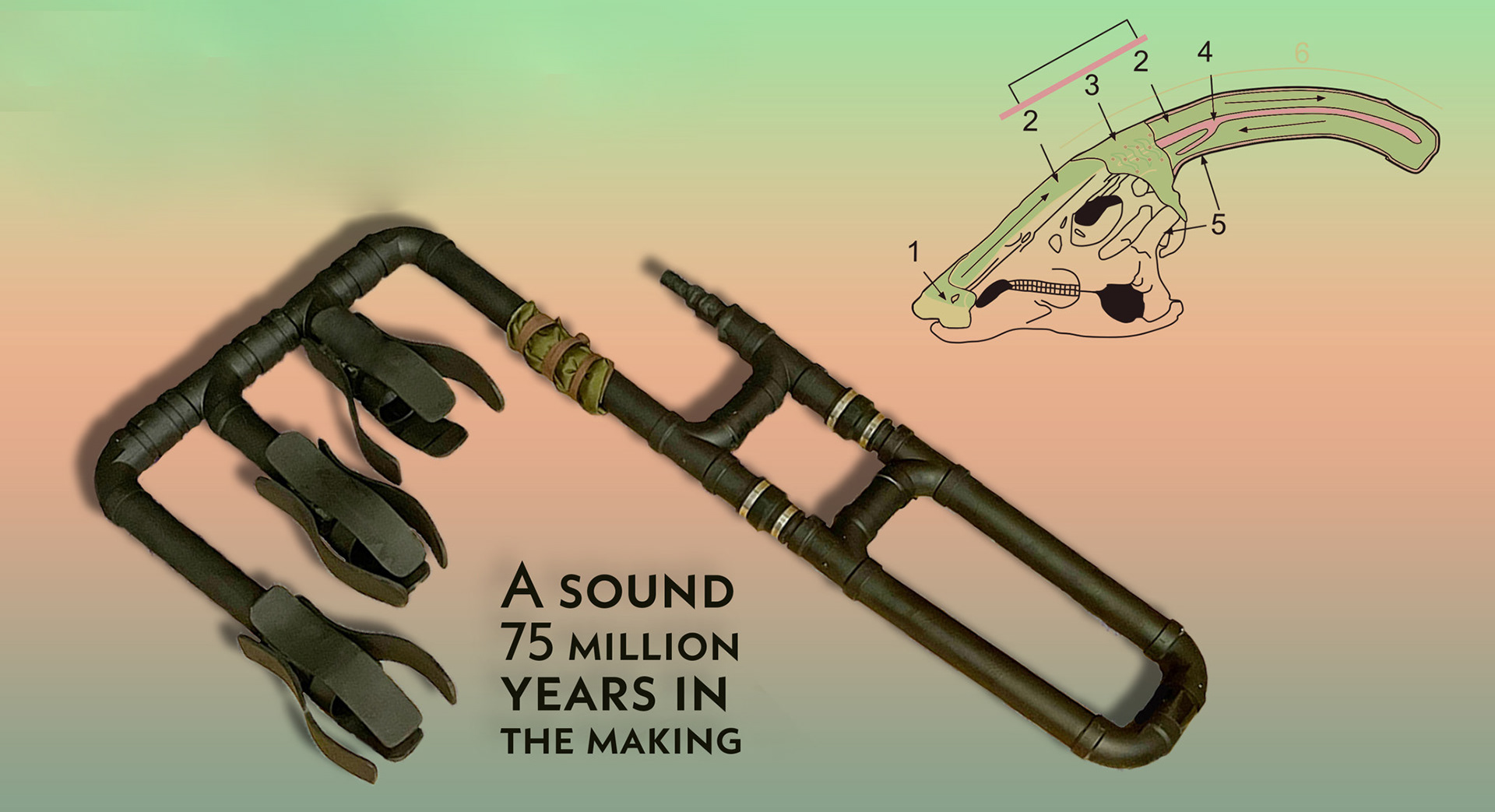
Traditional instruments follow human ergonomics and cultural norms but rarely borrow from nature’s resonant strategies. My sketches explored pipes, horns, and chambers inspired by animal anatomy, testing airflow, curvature, and scale with PVC and molds.
Core Issue: Instrument design overlooks natural systems like lungs and crests, limiting music’s potential as a translation of biological form and function.
Art Direction & Visual System
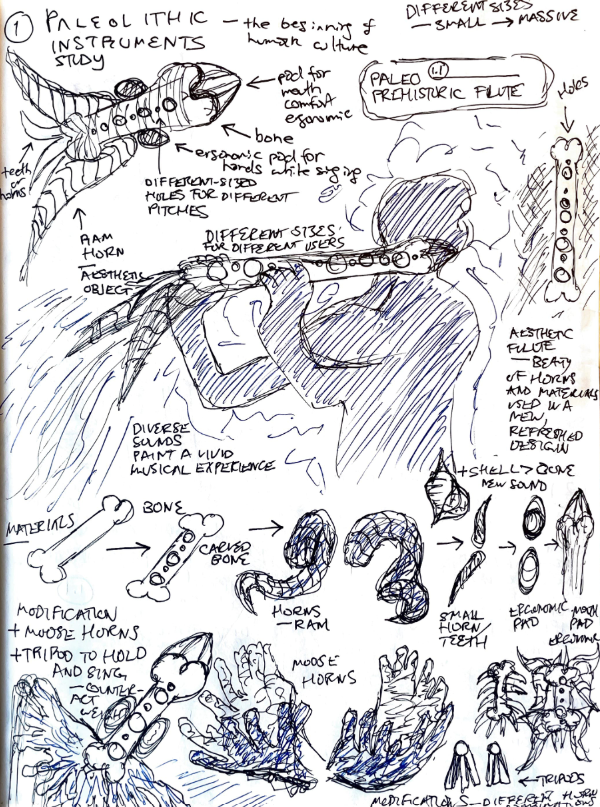
Paleolithic Instrument Study: Exploring ergonomic grips, varied hole sizes for pitch, and raw materials (bone, horn, shell) to understand the roots of tactile musical interaction.
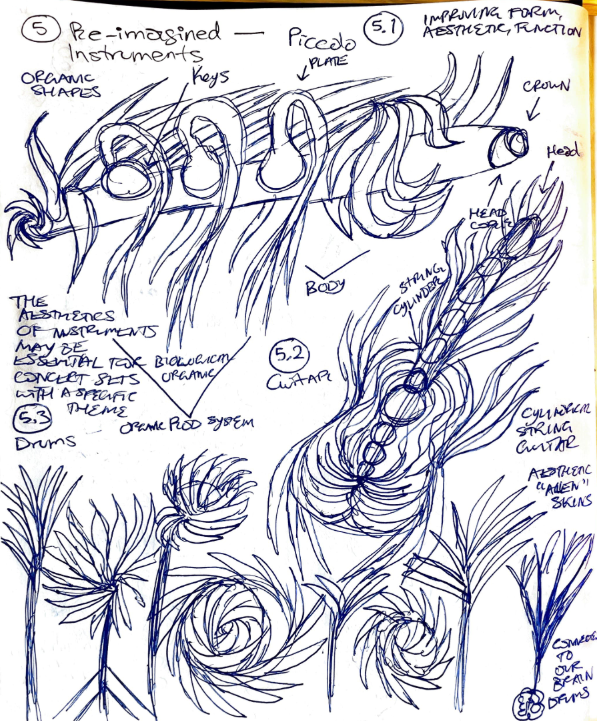
Re-imagined Instrument Families: Translating organic shapes and traditional mechanics (Piccolo, Guitar, Drums) into biological, fluid forms.
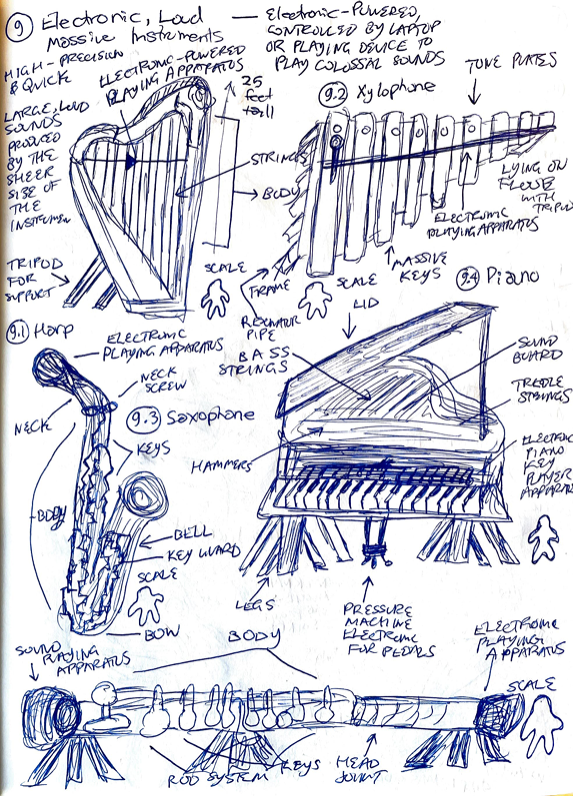
Macro-Scale Concepts: Sketching electronic and massive instruments (Harp, Piano, Saxophone) to test scale, body mechanics, and structural constraints.
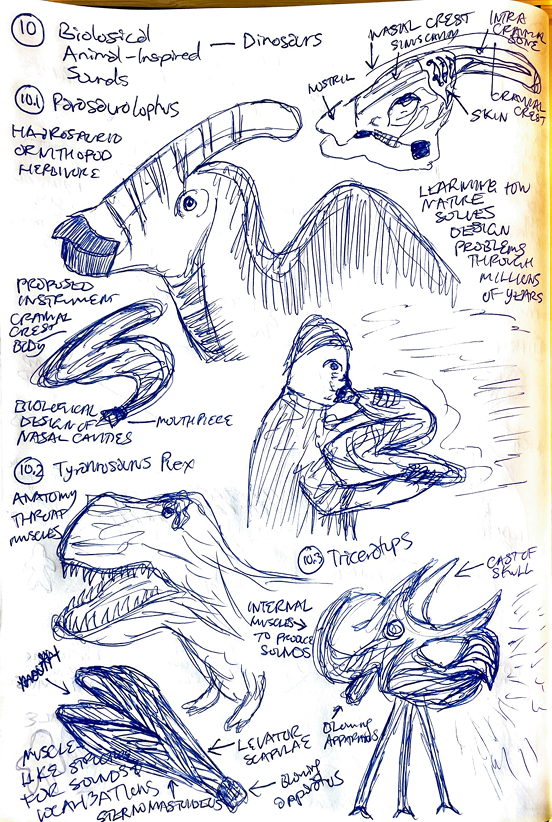
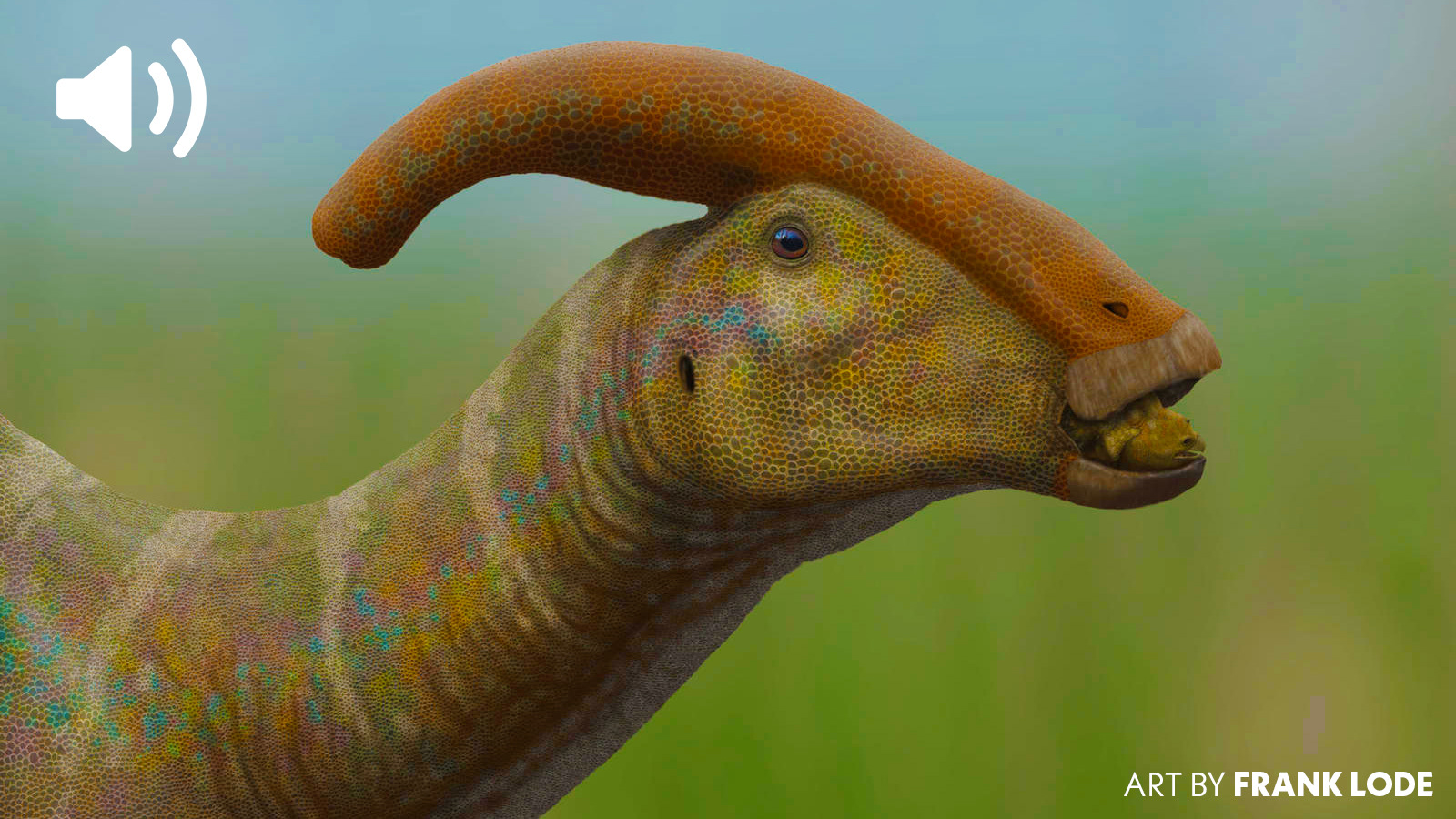
Biological Inspiration: Analyzing nasal cavities and crest resonance in the Parasaurolophus, T-Rex, and Triceratops to inform the final acoustic chamber design.
Craft & Production
Formal sound exploration
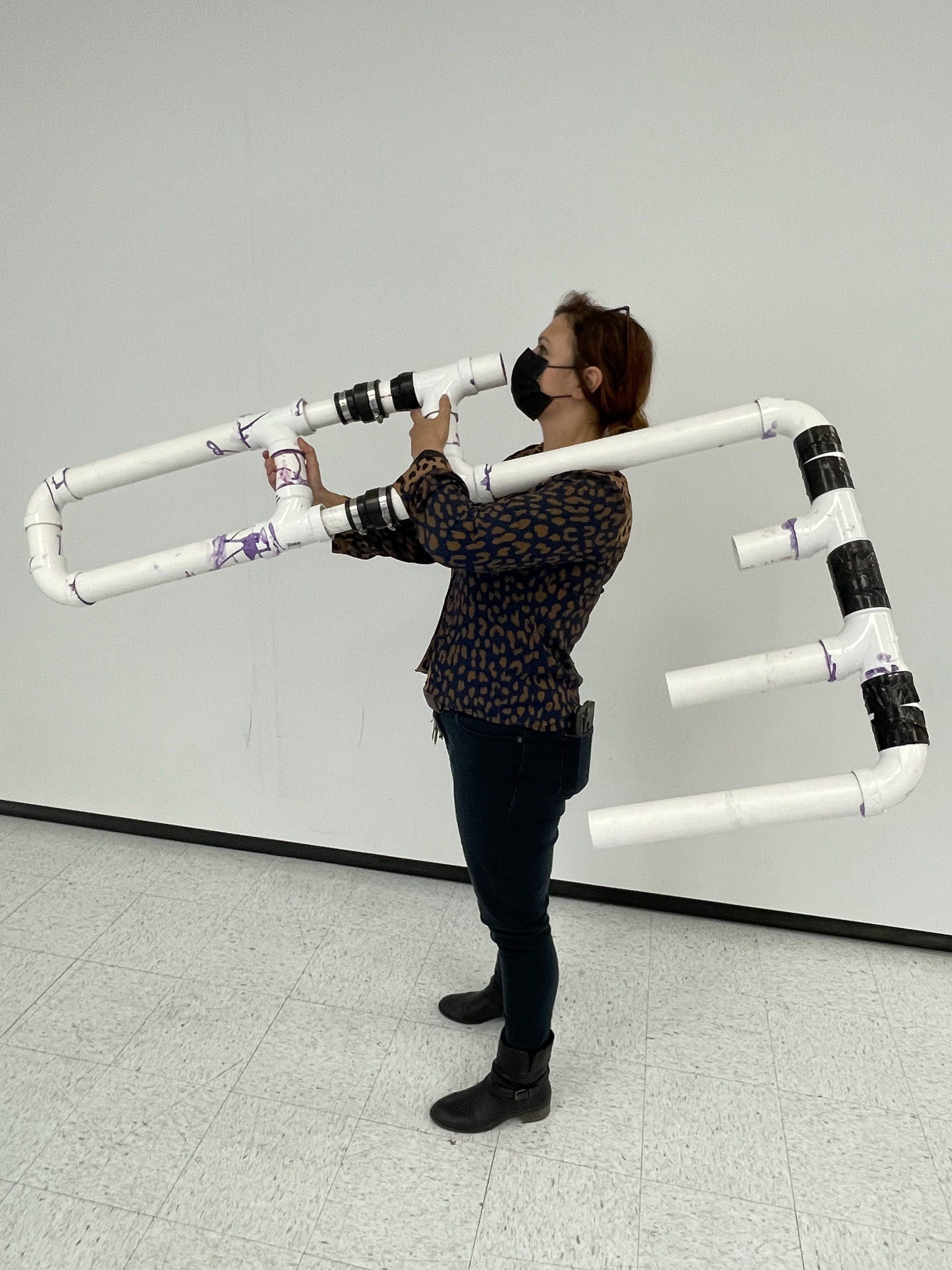
Early prototypes tested scale and form through large PVC assemblies, experimenting with airflow, resonance length, and ergonomics. These trials helped define how body posture and horn orientation shaped tonal range.
Material-based sound discovery
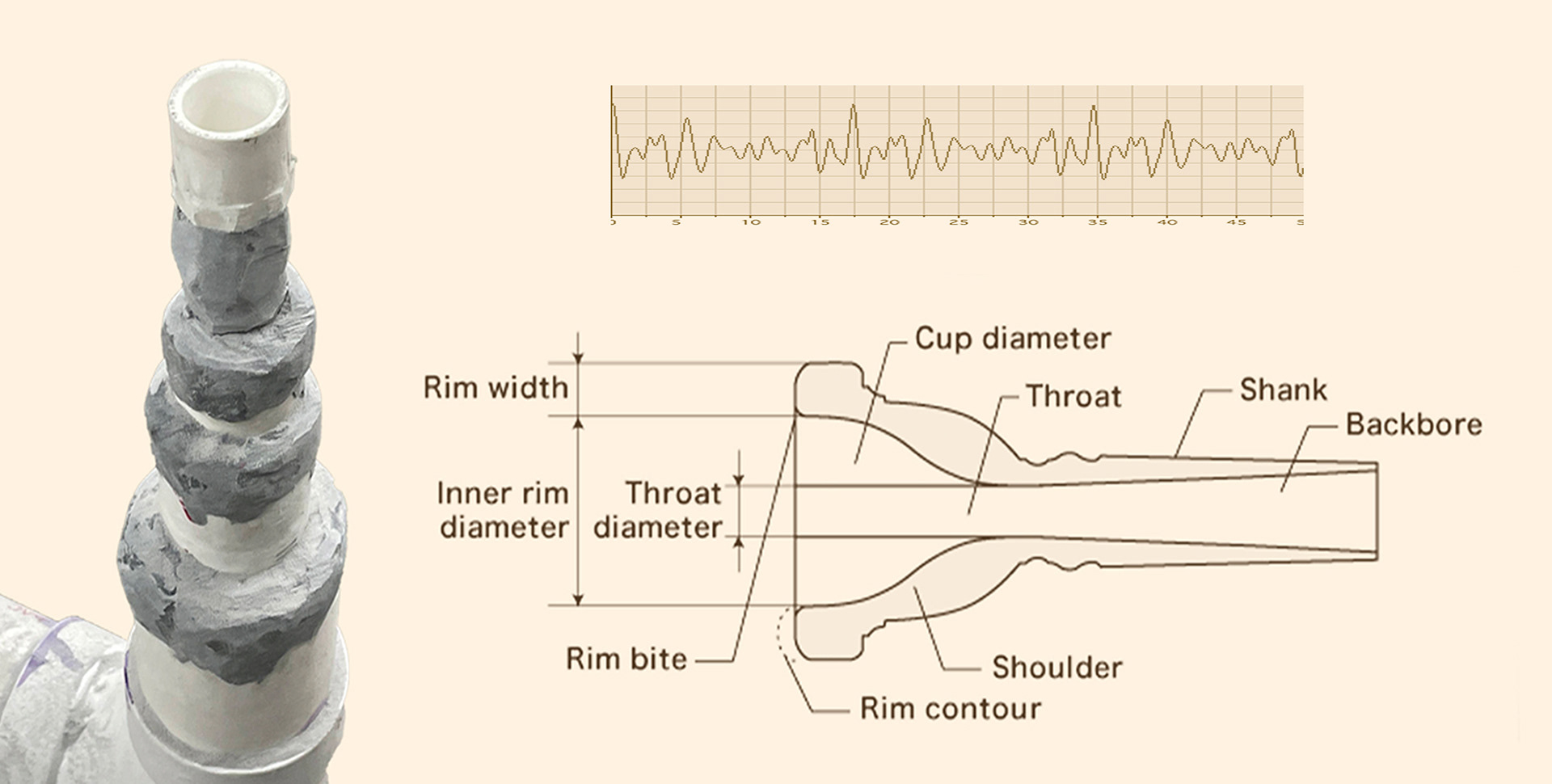
Layered clay mouthpieces and PVC fittings allowed rapid iteration on rim shape, throat diameter, and bore. Material tests revealed how small changes in contour and texture directly impacted sound quality and playability.
Build Process
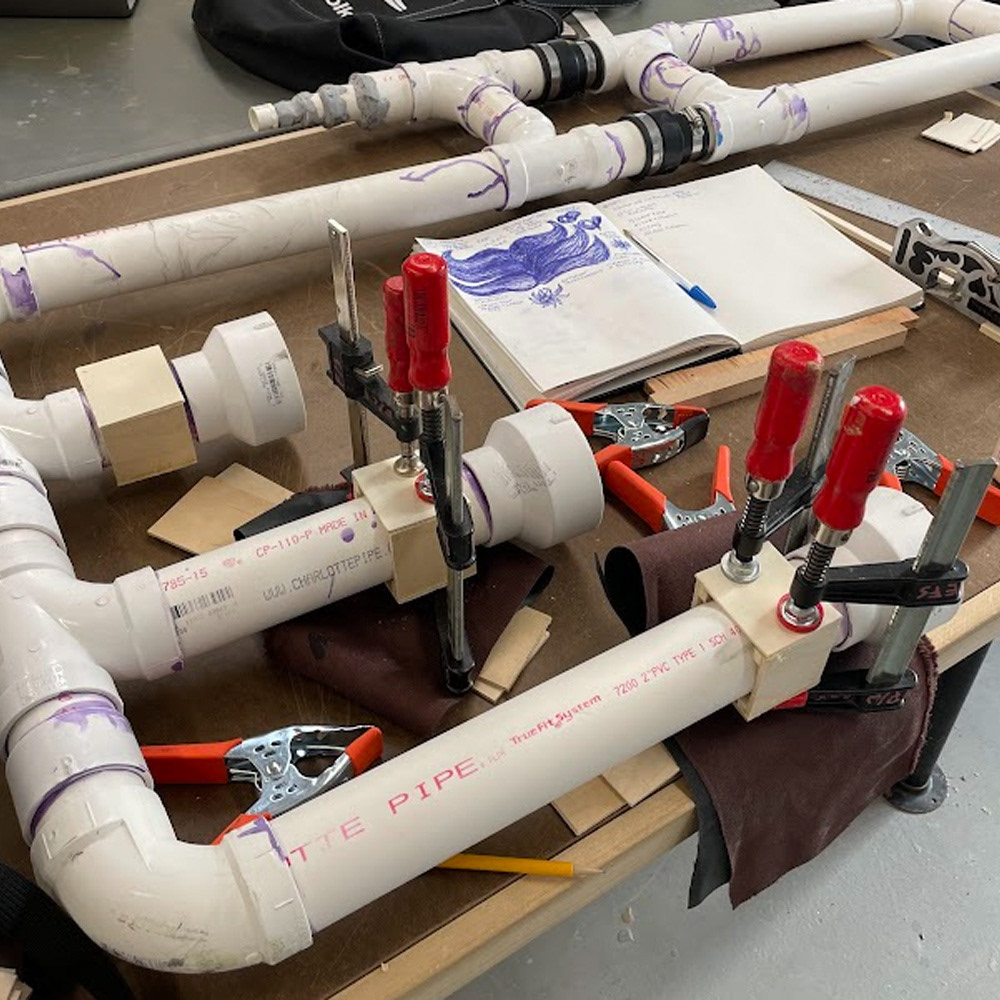
Structural assembly
PVC pipes were cut, joined, and reinforced with clamps to form the backbone of the instrument. Curved forms were added to suggest biomimetic resonance chambers.
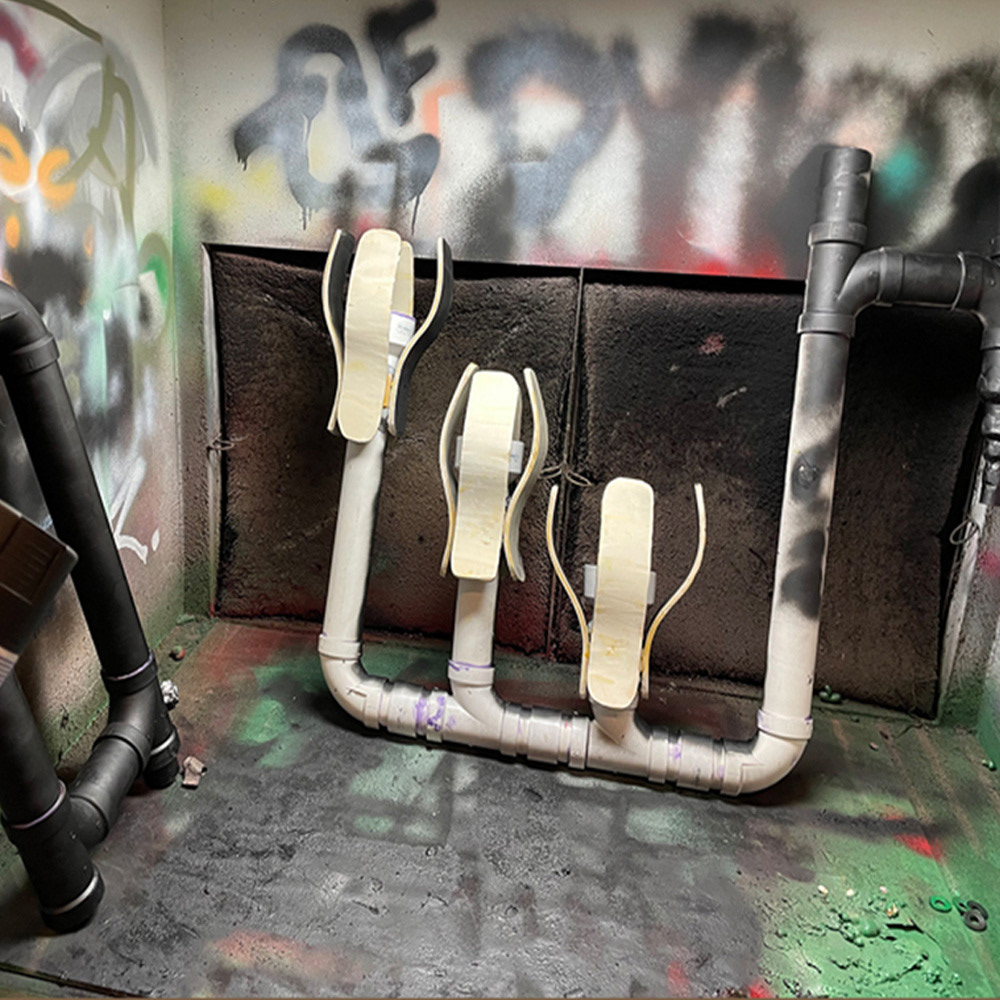
Surface finishing
Spray paint was applied in layers to unify the material palette and elevate the aesthetic from raw construction to a more refined object.
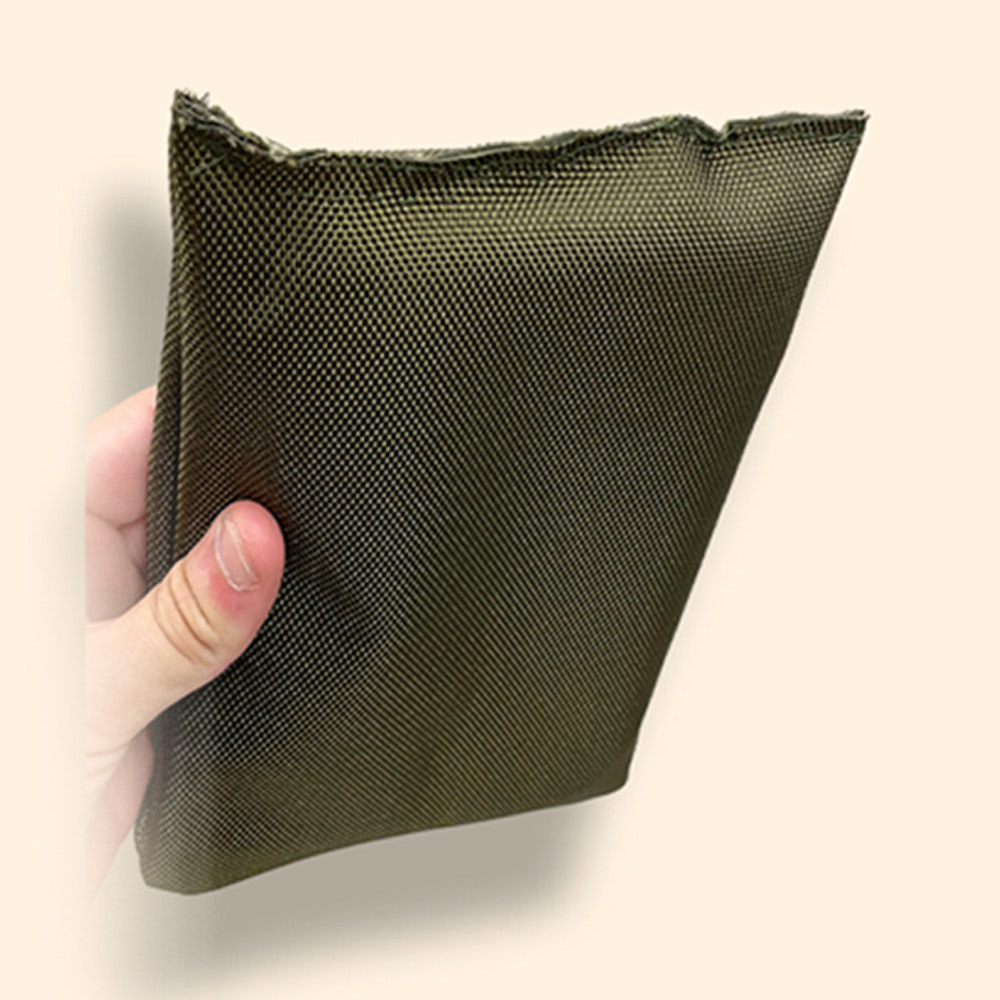
Detailing & materials
Flexible fabric elements were tested as surface wraps and accents, exploring comfort, texture, and durability in the final design.
Final Designs
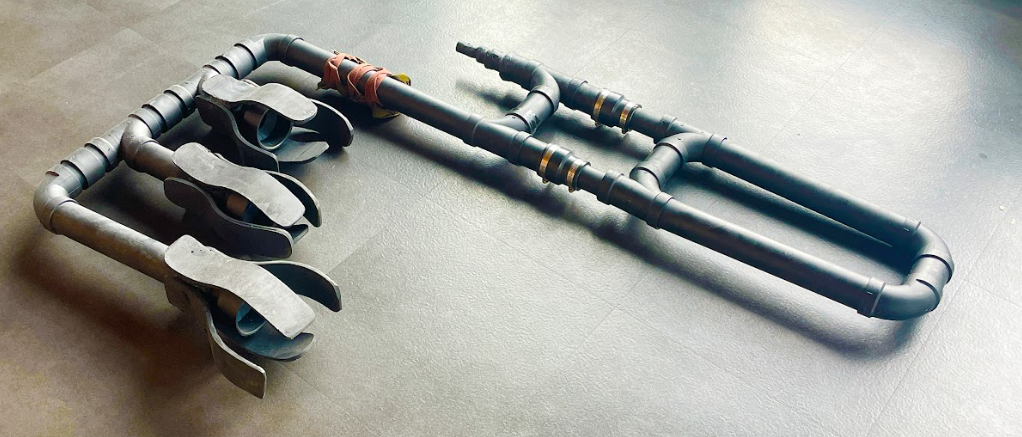
Finished musical instrument “Parasaurian” with sewn shoulder pad, laminated wood extensions, and spray paint.
Research source and sound reconstruction courtesy of Williamson et al. on Digital paleontology: Producing the sound of the Parasaurolophus dinosaur.