NASA HERC: Lunar Rover Steering & Systems Design
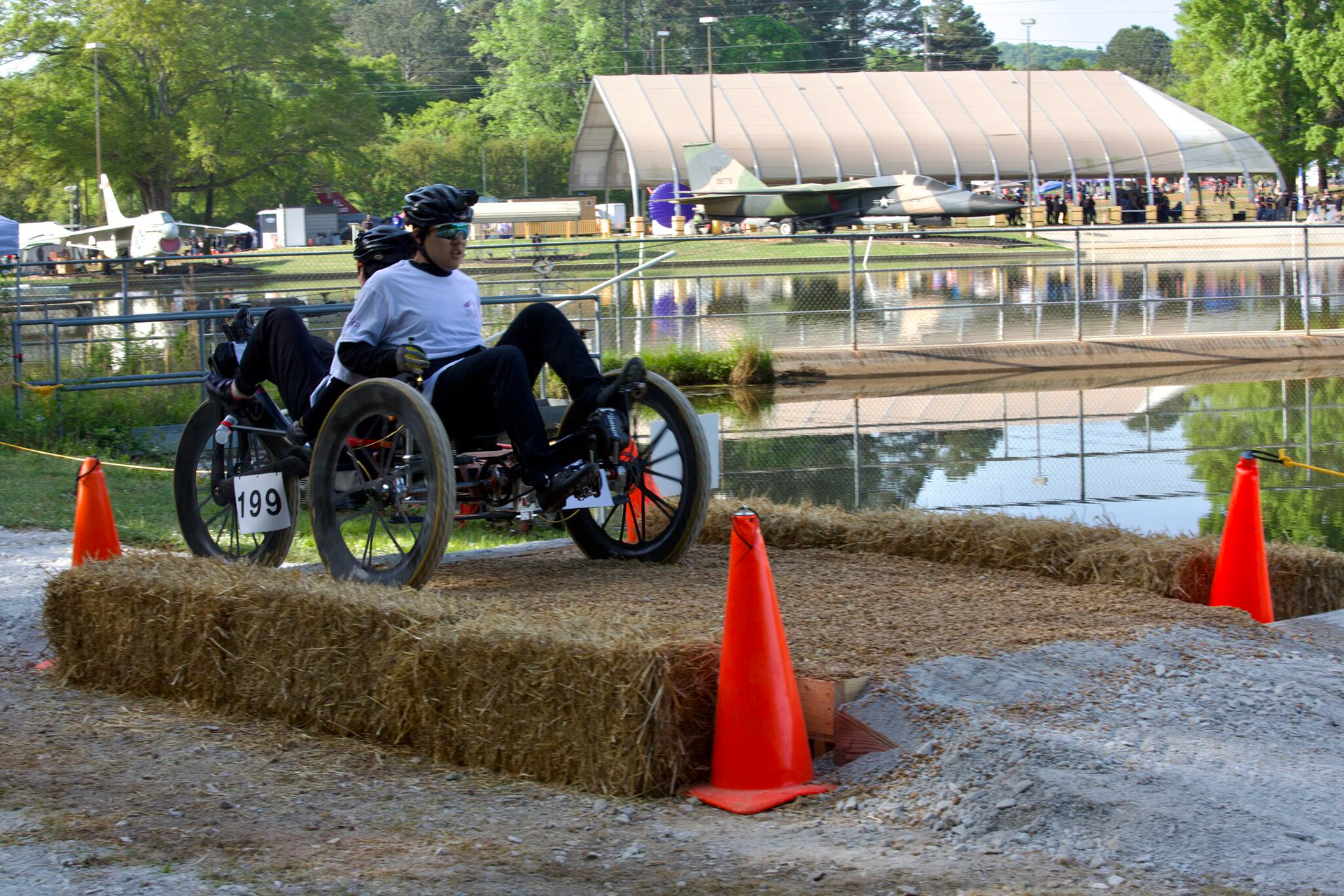
Role: Designer & Fabricator (Steering System), Technical Strategist
Timeline: Sep-Dec 2025
Team: RISD Rover Steering Team (Wendy Tang, Ray Liu, Adhvik Aggarwal, Raúl Falcón)
Tools Used: SolidWorks, Fusion360, SLA/FDM 3D Printing, Carbon Fiber Layups, Google Docs, Notion
The Creative Brief
Design, fabricate, and document a human-powered lunar rover for the 2026 NASA Human Exploration Rover Challenge (HERC) in Huntsville, Alabama. The vehicle had to navigate simulated lunar and Martian terrain, fit within a 5-foot cubic volume for storage, and weigh under 94 lbs. My specific directive was to engineer the steering architecture from initial ideation to final carbon-fiber integration.
Goals
Mechanical Advantage: Achieve a 50-degree steering angle and a targeted 9-foot turning radius while resisting extreme driver load.
Ergonomics & Clearance: Ensure the system clears the chassis bottom during suspension travel without restricting the drivers' legroom.
Operational Readiness: Translate complex engineering decisions into rigorous, NASA-compliant documentation for the Design Review (DR) and Operational Readiness Review (ORR).

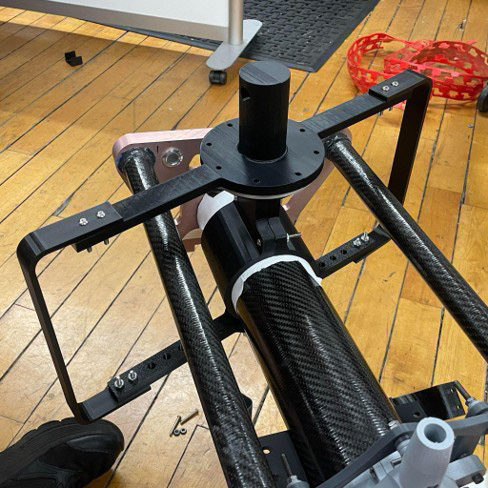
System Architecture
Horizontal Handlebar vs. Cranker Four-Bar (C4B)
Early in the process, we tested an Indirect Bearing (IB) horizontal handlebar system, similar to commercial trikes. However, rigorous testing revealed chassis packaging limits that caused severe tie-rod offset and bump-steer.
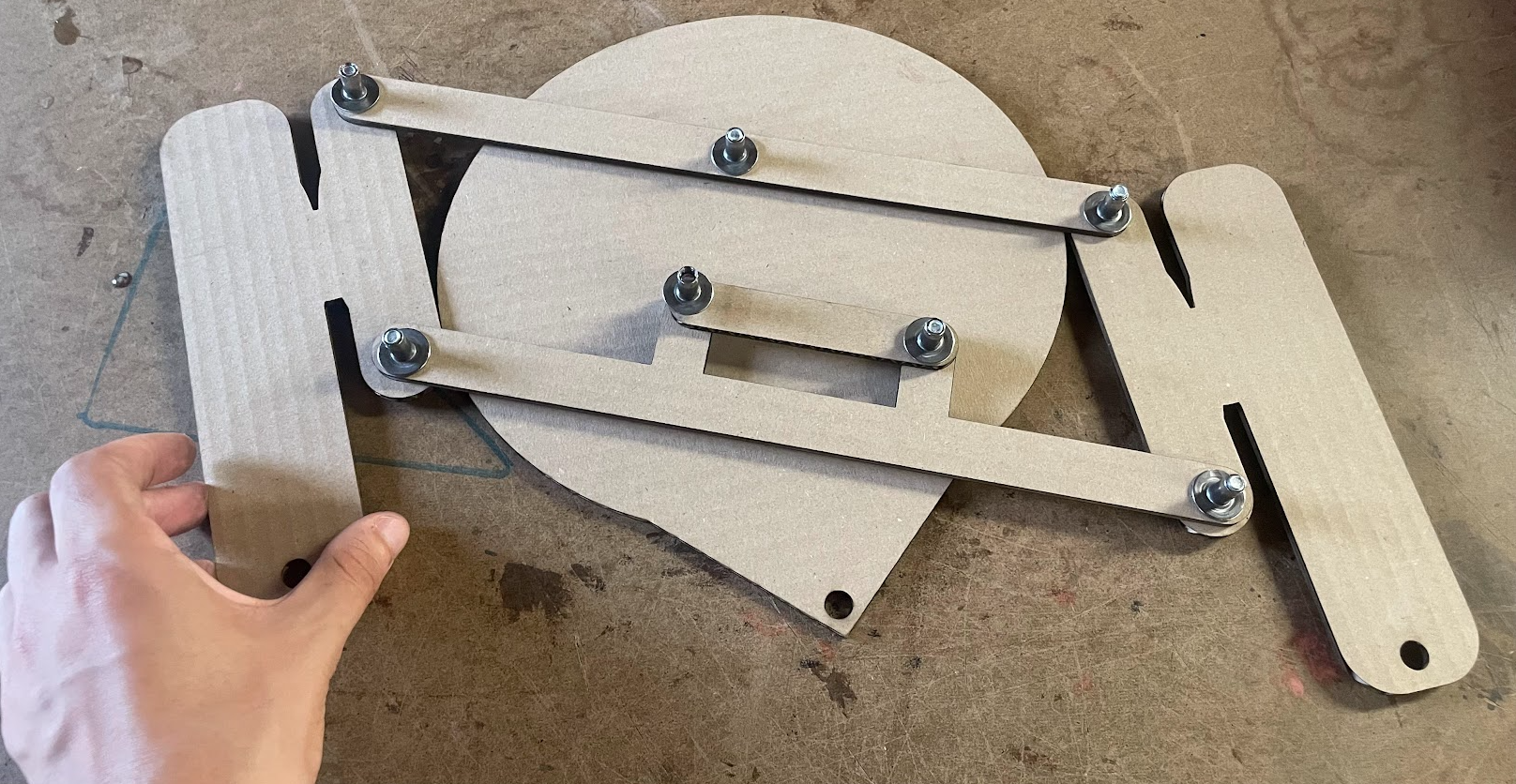
We pivoted to a Cranker Four-Bar (C4B) linkage to overcome chassis packaging limits. This perpendicular dual-crank architecture enabled an optimal tie-rod layout, providing a consistent turn rate and isolating the steering from rough-terrain rider feedback.
Comparison: Horizontal Steering System (IB) vs. Crank Steering System (C4B)
Weight: IB = C4B
• Depends on bearing count (IB) vs added structure (C4B)
Sturdiness: IB > C4B
• IB resists unintended rider forces better;
• IB resists unintended rider forces better;
• C4B’s vertical handlebar is more exposed.
Intuitiveness: IB = C4B
• IB feels familiar like bicycle steering;
• IB feels familiar like bicycle steering;
• C4B feels new but can adjust to.
Steering Performance: IB < C4B
• IB limited by current chassis geometry (tie-rod offset, bump-steer);
• IB limited by current chassis geometry (tie-rod offset, bump-steer);
• C4B enables cleaner, more optimal linkage.
Iteration
Iterating the Architecture
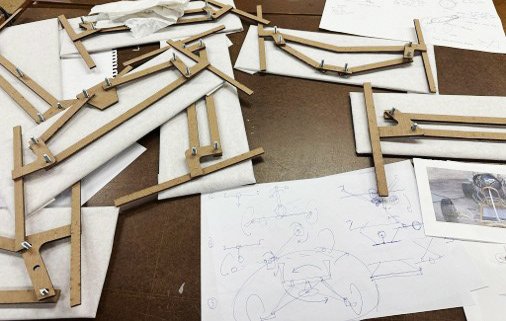
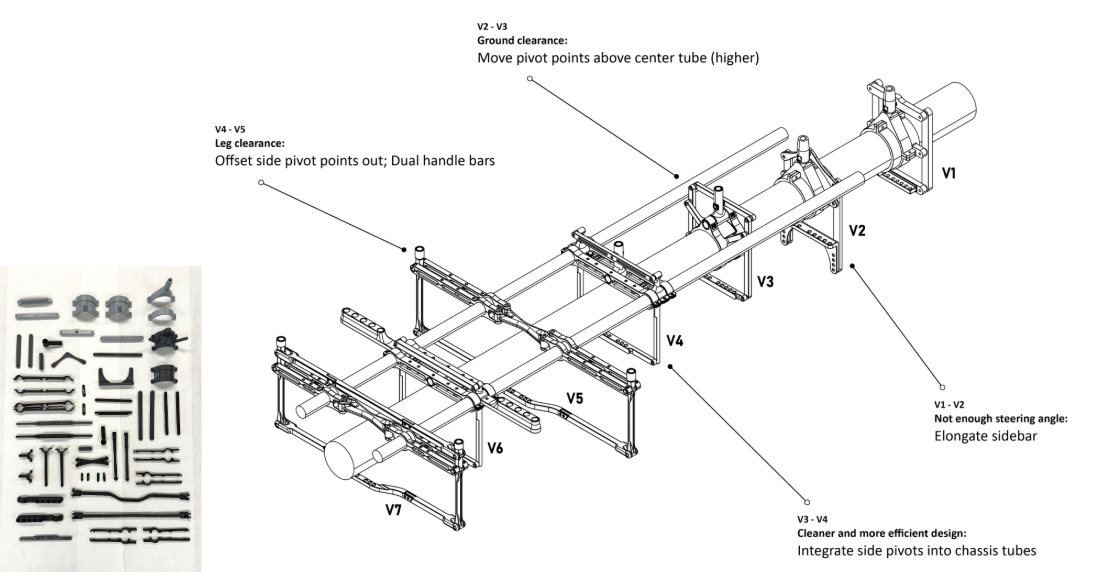
Hardware development requires ruthless iteration. Between Version 1 and Version 7, the geometry was entirely overhauled to solve cascading clearance issues:
V1-V2 (Steering Angle): Elongated sidebars to increase the turning radius.
V2-V3 (Ground Clearance): Shifted pivot points above the center tube to avoid impacts on lunar obstacles.
V4-V5 (Leg Clearance): Offset side pivot points outward and integrated dual handlebars to prevent driver interference.
V5-V7 (A-Arm Conflict): Curved the center bar backward and extended the bottom bar forward to clear the suspension components.
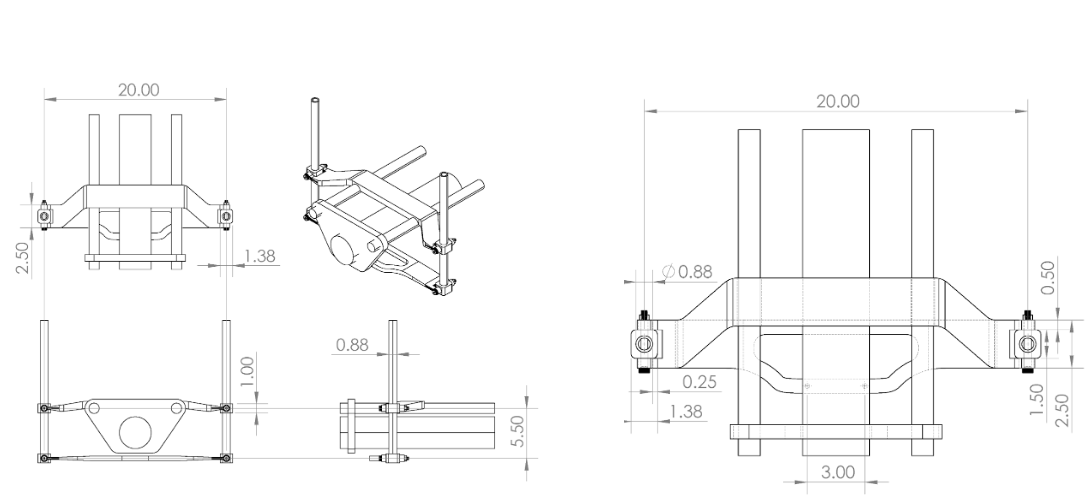
Orthographic Views & Dimensions of our updated Crank Steering System
Advanced Fabrication & Materiality
To meet NASA’s 94lb weight limit, I helped engineer a high-strength hybrid assembly:
Carbon Fiber: Utilized thin-walled carbon tubing for primary linkages to maximize rigidity-to-weight ratio.
3D-Printed Inserts: Embedded LW-PLA internal supports into wet layups to reinforce high-stress joints.
Low-Friction Actuation: Integrated SLS-printed bushings and shoulder bolts for smooth, reliable steering under heavy driver load.
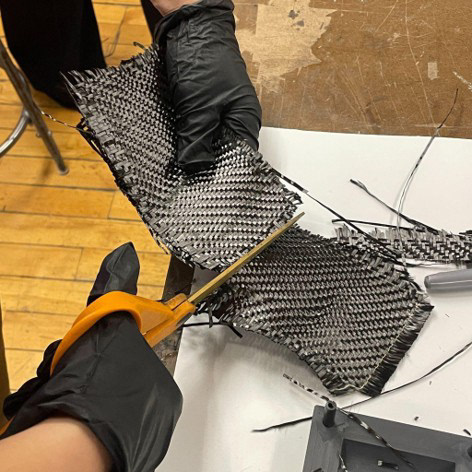
Cutting Carbon Fiber
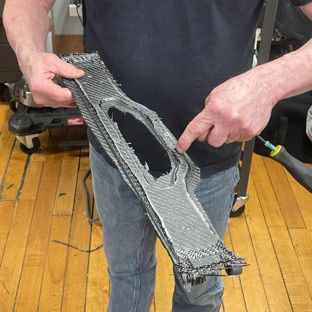
Crank Steering in Carbon
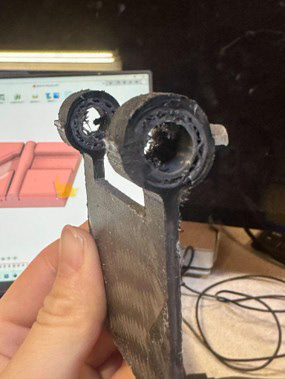
Stress Test Results
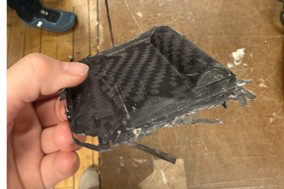
Carbon Fiber Bushing Prototype
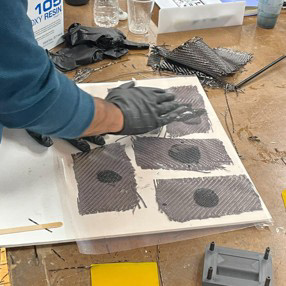
Applying Epoxy Carbon Fiber
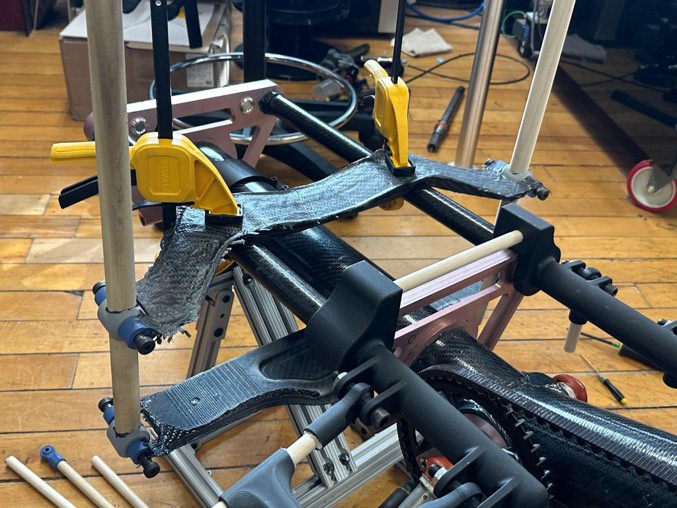
Crank Steering Prototype with Carbon
Technical Strategy & The Phoenix Award
Leveraging my Literary Arts background, I served as the technical editor for drafts of our 100+ page NASA Design Review for the Steering team's section. I translated raw engineering data into a cohesive and articulate narrative, ensuring 100% citation accuracy and clarity for NASA safety reviews.
The Result: Our documentation secured the NASA Phoenix Award for most improvement between reports.
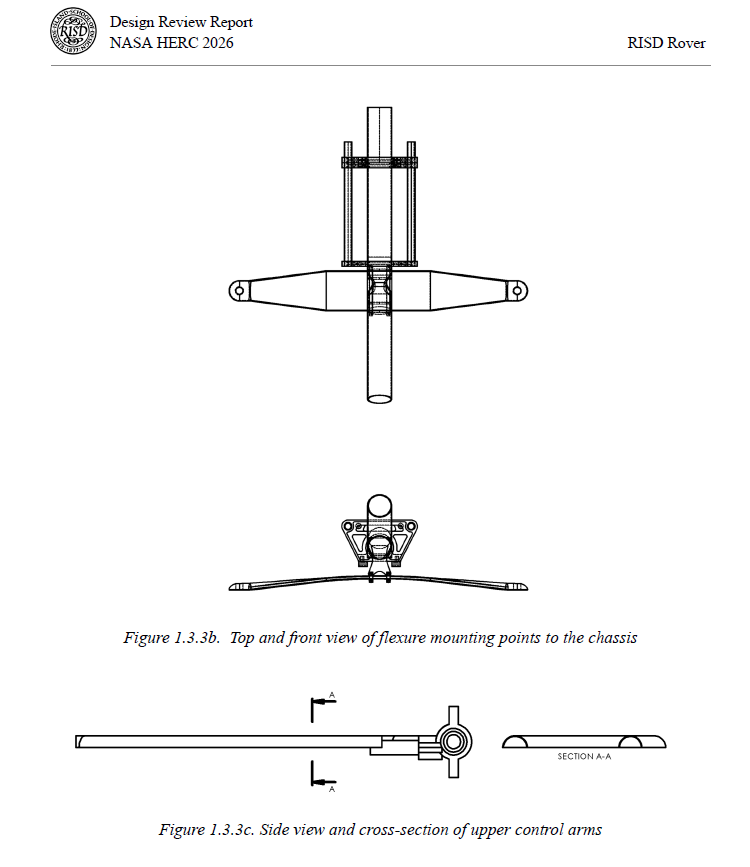
Final Designs
Digital Precision meets Physical Durability
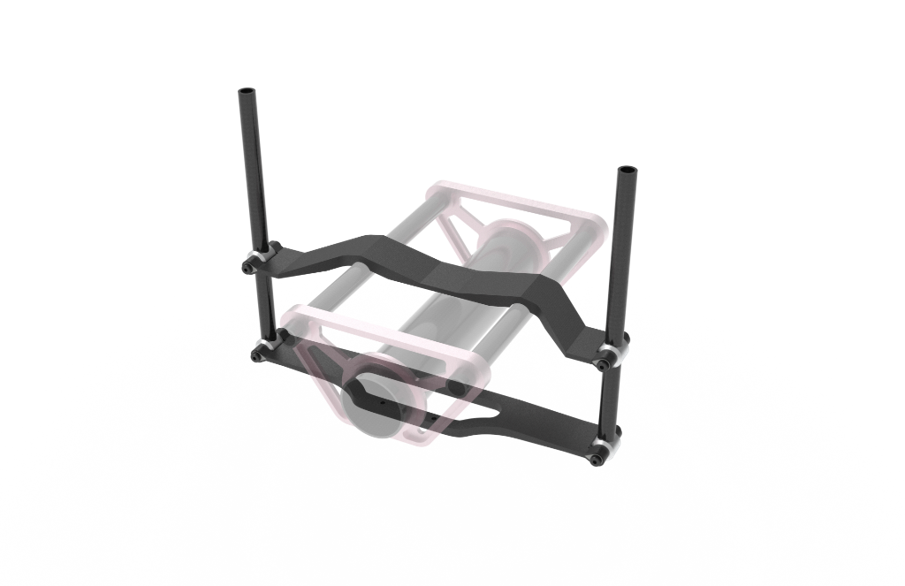
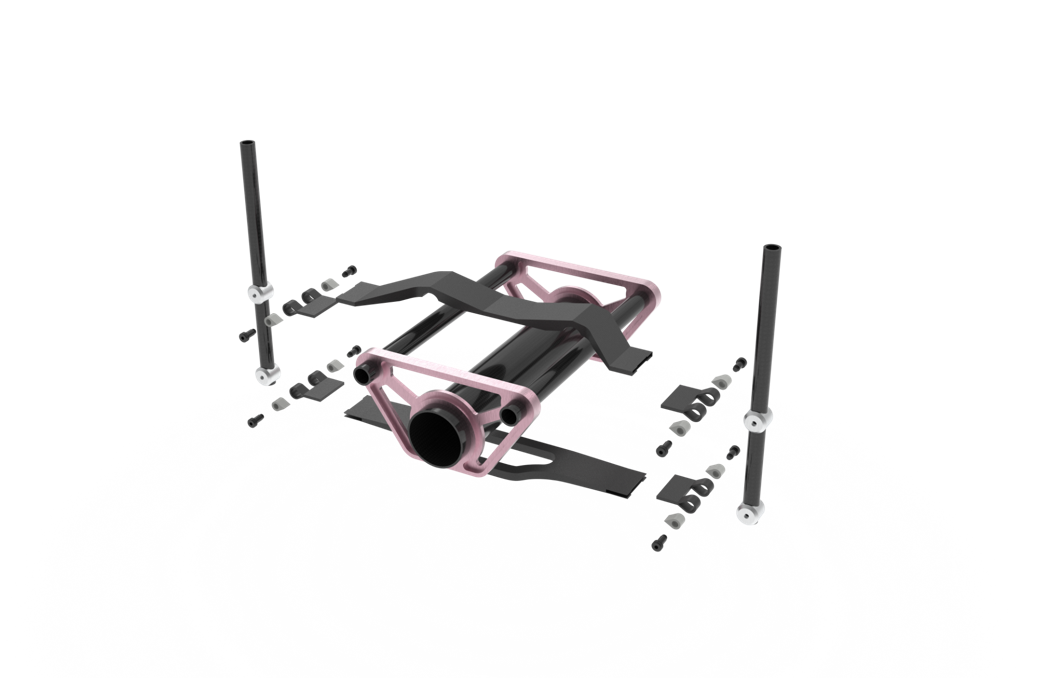
Translating CAD into a race-ready lunar vehicle.
Final 3D assembly of the Cranker Four-Bar (C4B) steering system.
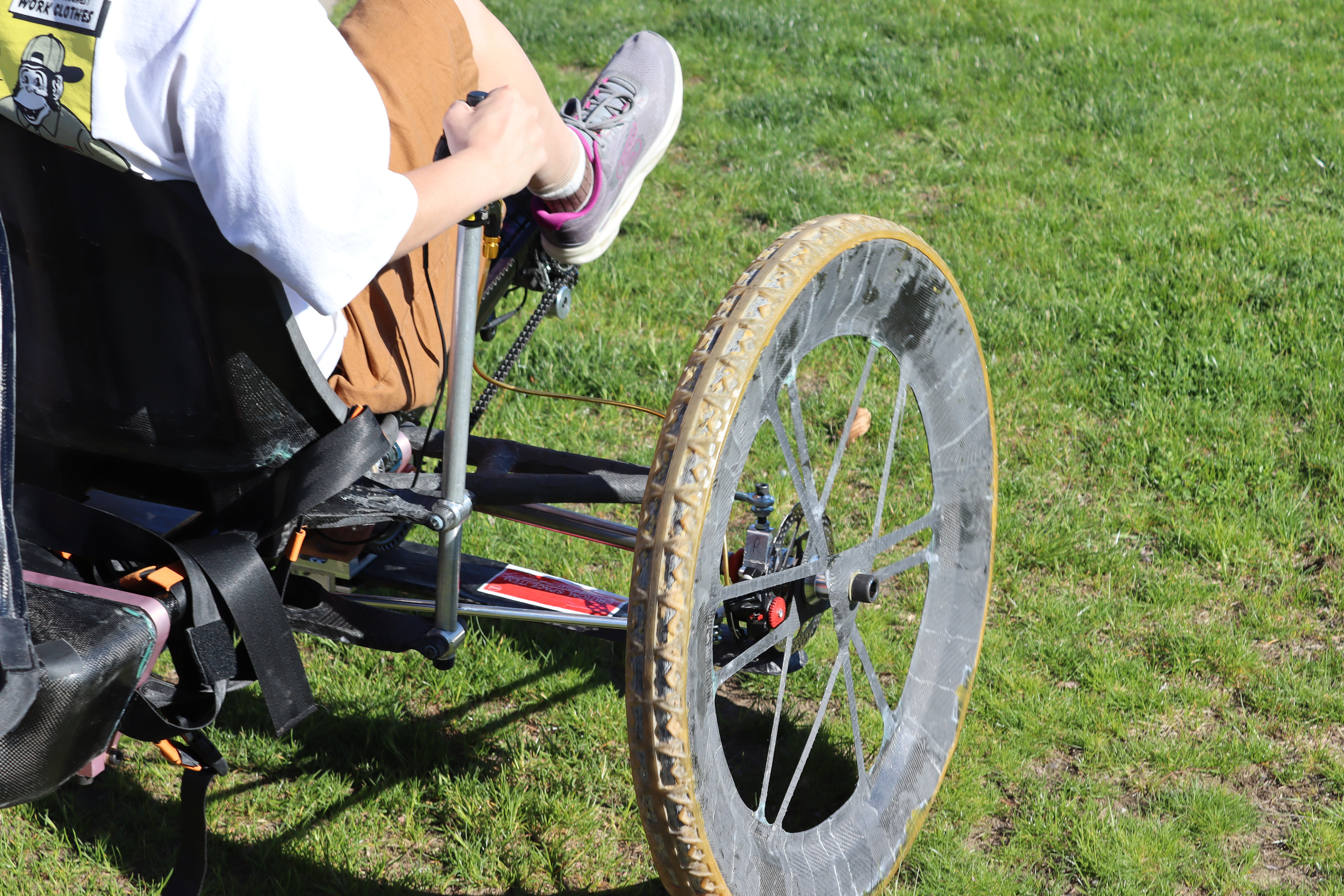
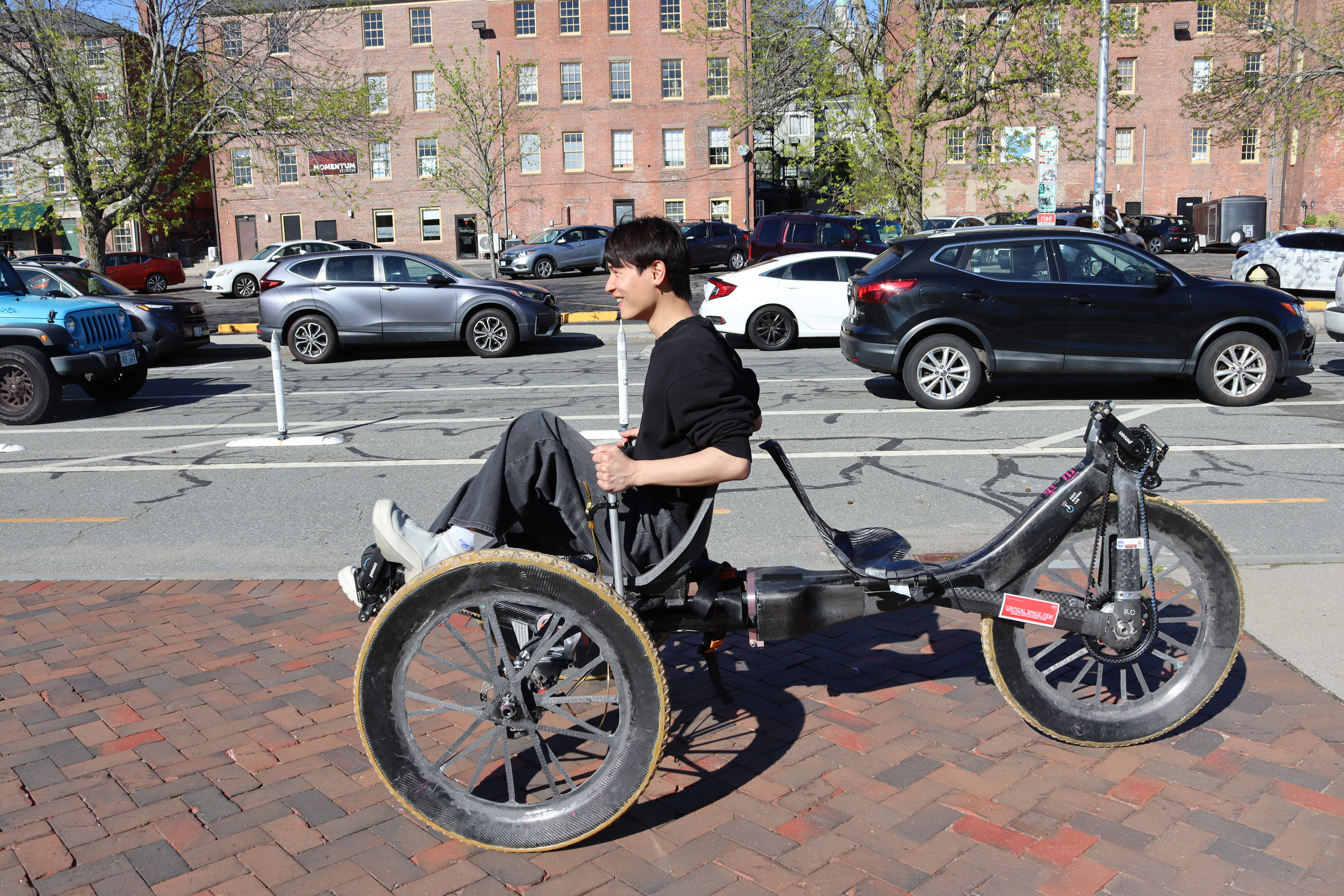
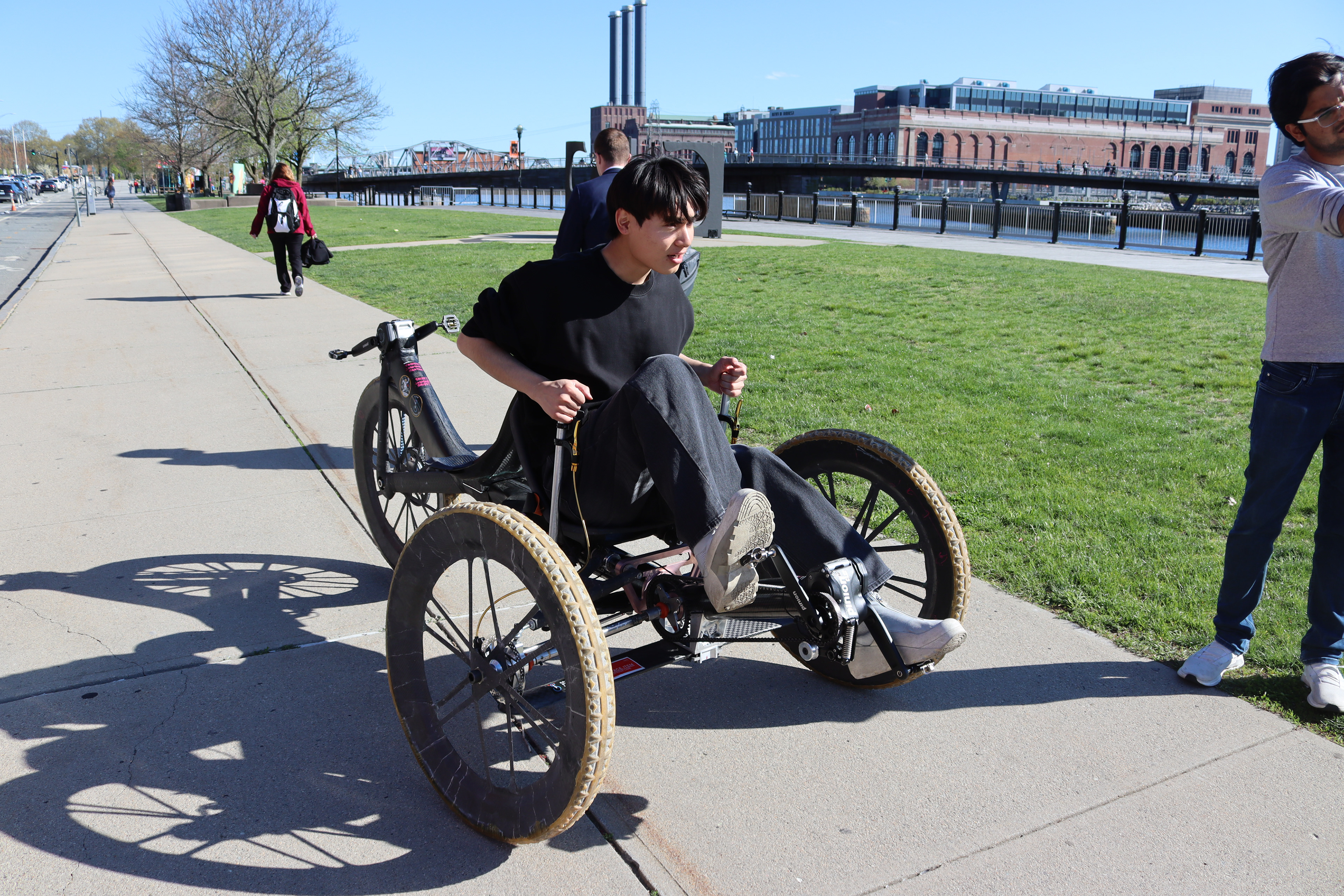
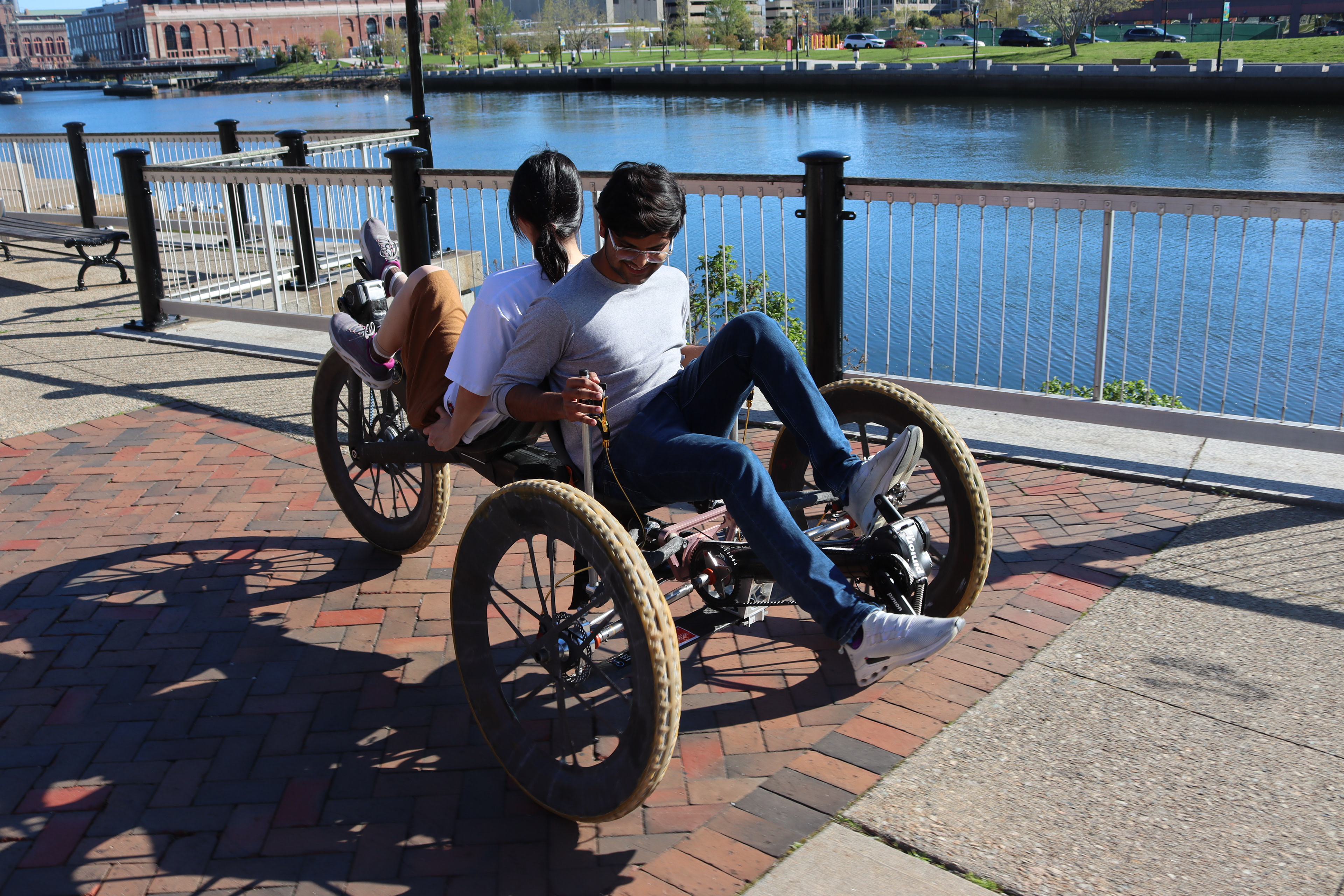
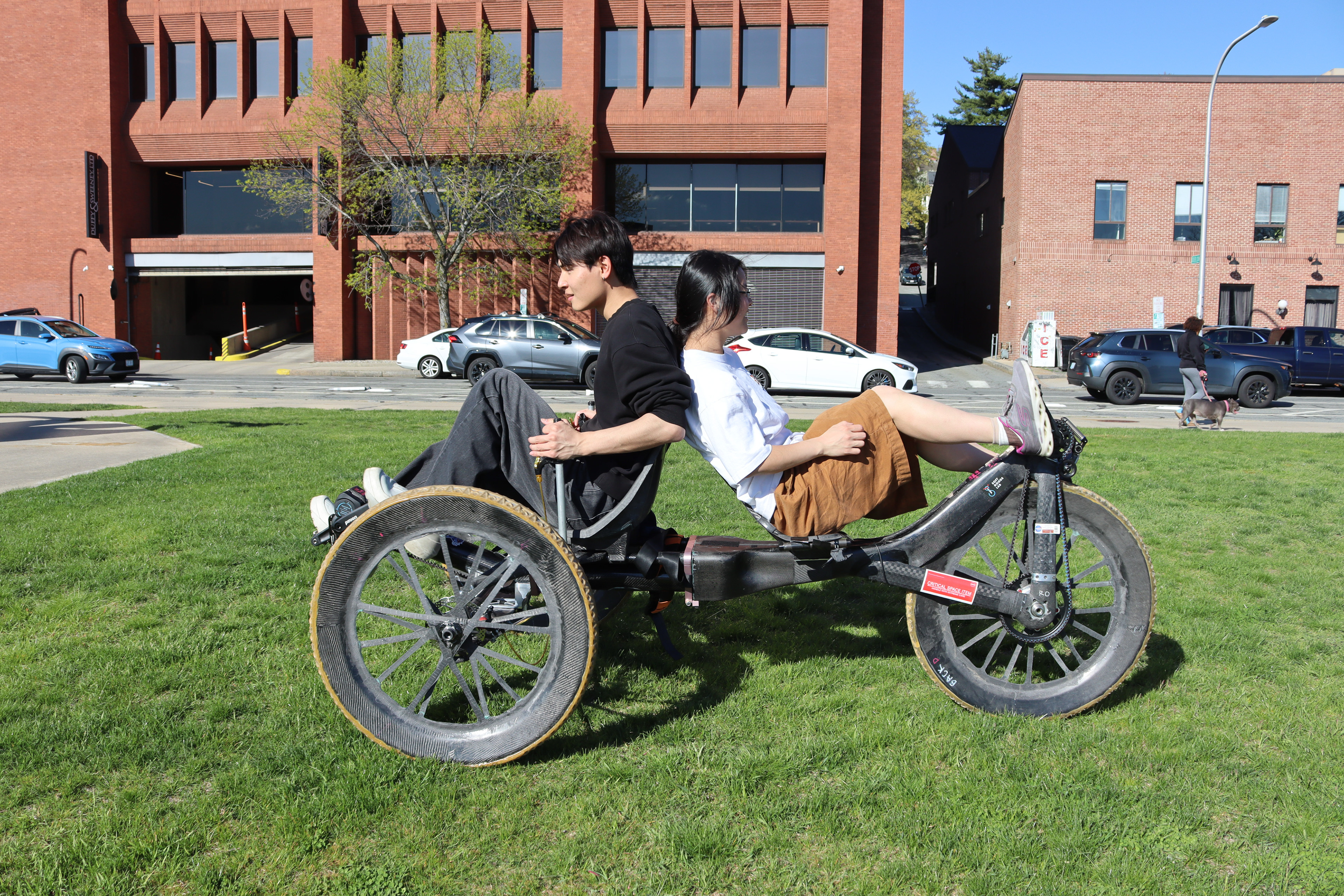
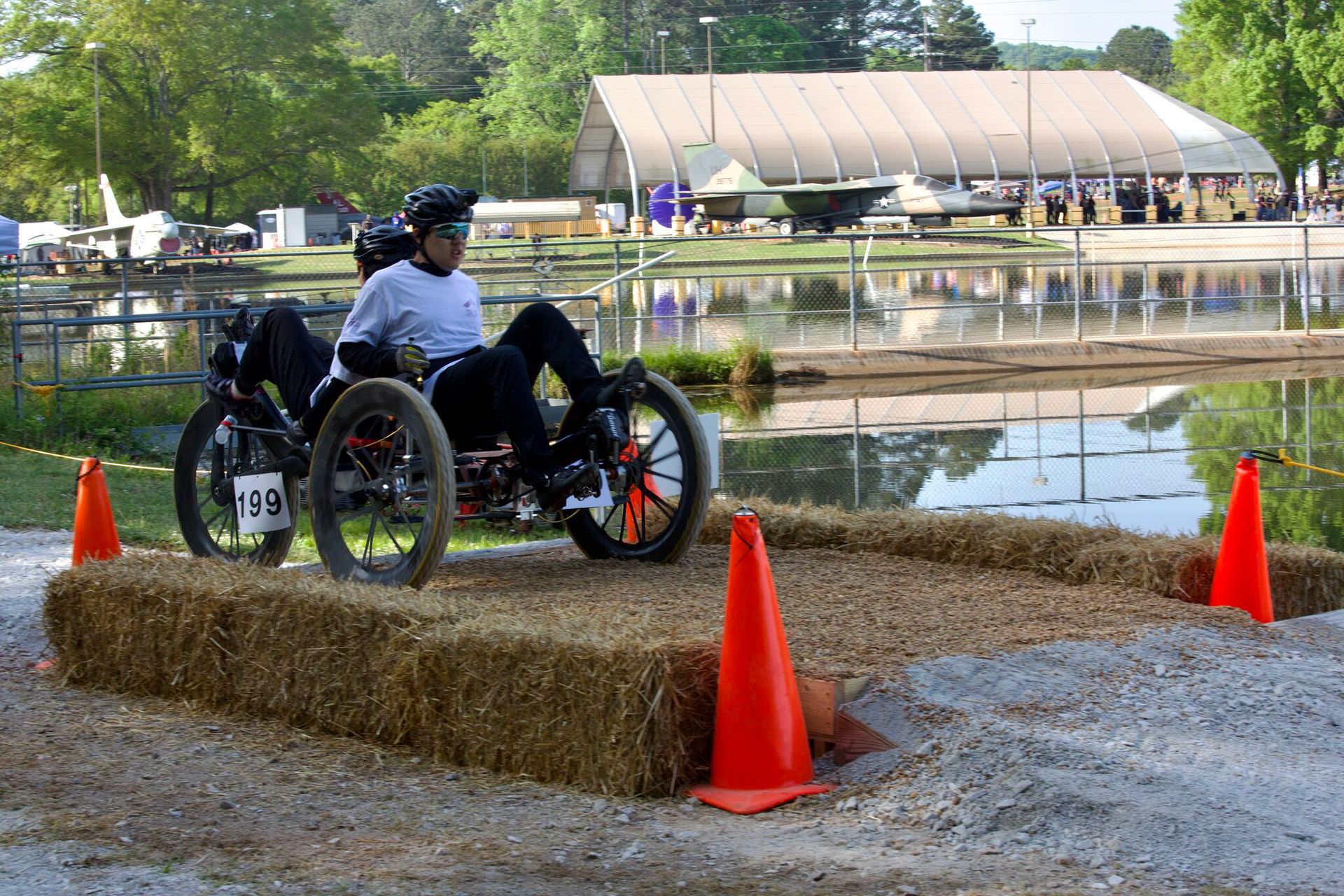
Final integration of the steering assembly onto the RISD Rover chassis for the NASA HERC 2026 competition.
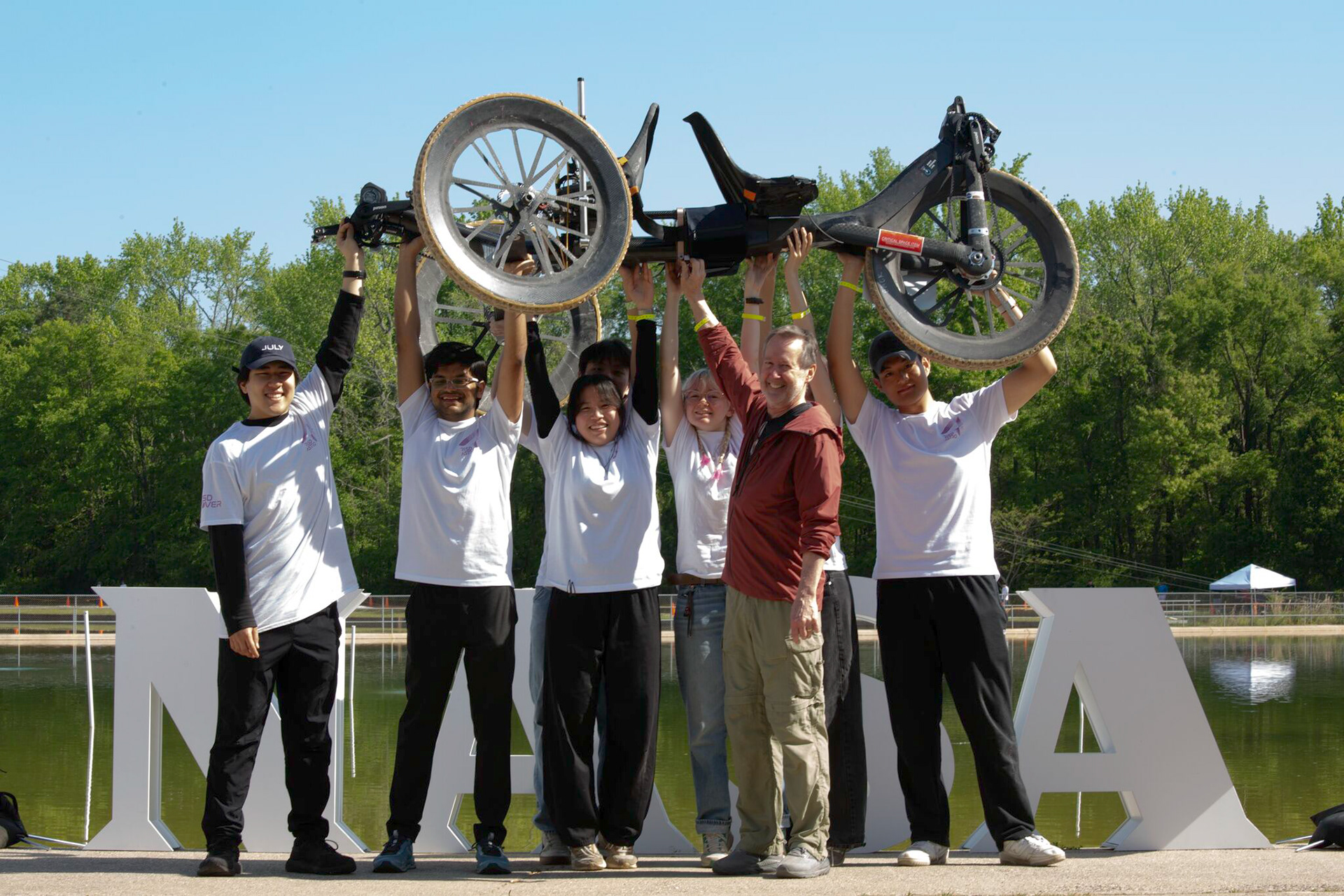
RISD Rover Team at 2026 NASA Human Exploration Rover Challenge | April 9-11, 2026 | U.S. Space & Rocket Center, Huntsville, AL