Maip: Dinosaur Animatronic
Role: Lead Industrial Designer
Timeline: April-May 2025
Tools Used: Arduino, Wood/Metal Shop, 3D Printing, Laser Cutting
The Creative Brief
Many exhibits don’t take into consideration the challenges kids face in connecting with science.
1. Static Skeletons
Can feel lifeless, because kids see the shape, but not the motion or behavior.
2. Technical Barriers
Robotics and electronics often feel intimidating or "for experts only."
3. Fragile Displays
Museum pieces can't usually be touched or experimented with.
4. Complex Concepts
Paleontology and mechanics can be hard to translate into playful learning.
5. Limited Interactivity
Few opportunities to repair, build, or tinker with what's on display.
Goals
• Learn about paleontology in a hands-on, interactive way
• Experiment with motors, sensors, and Arduino programming
• Share discoveries with friends and family
• Engage with sustainable, DIY projects that feel achievable and inspiring
Frustrations
• Finds static exhibits boring and hard to connect with
• Limited access to advanced robotics or expensive tools
• Sometimes struggles to link textbook learning with real-world examples
• Projects at home can feel small-scale compared to museum experiences
Art Direction & Visual System
Design a playable, repairable animatronic emulating a 3D reconstruction of a dinosaur (Maip macrothorax) and leveraging four servo motors.
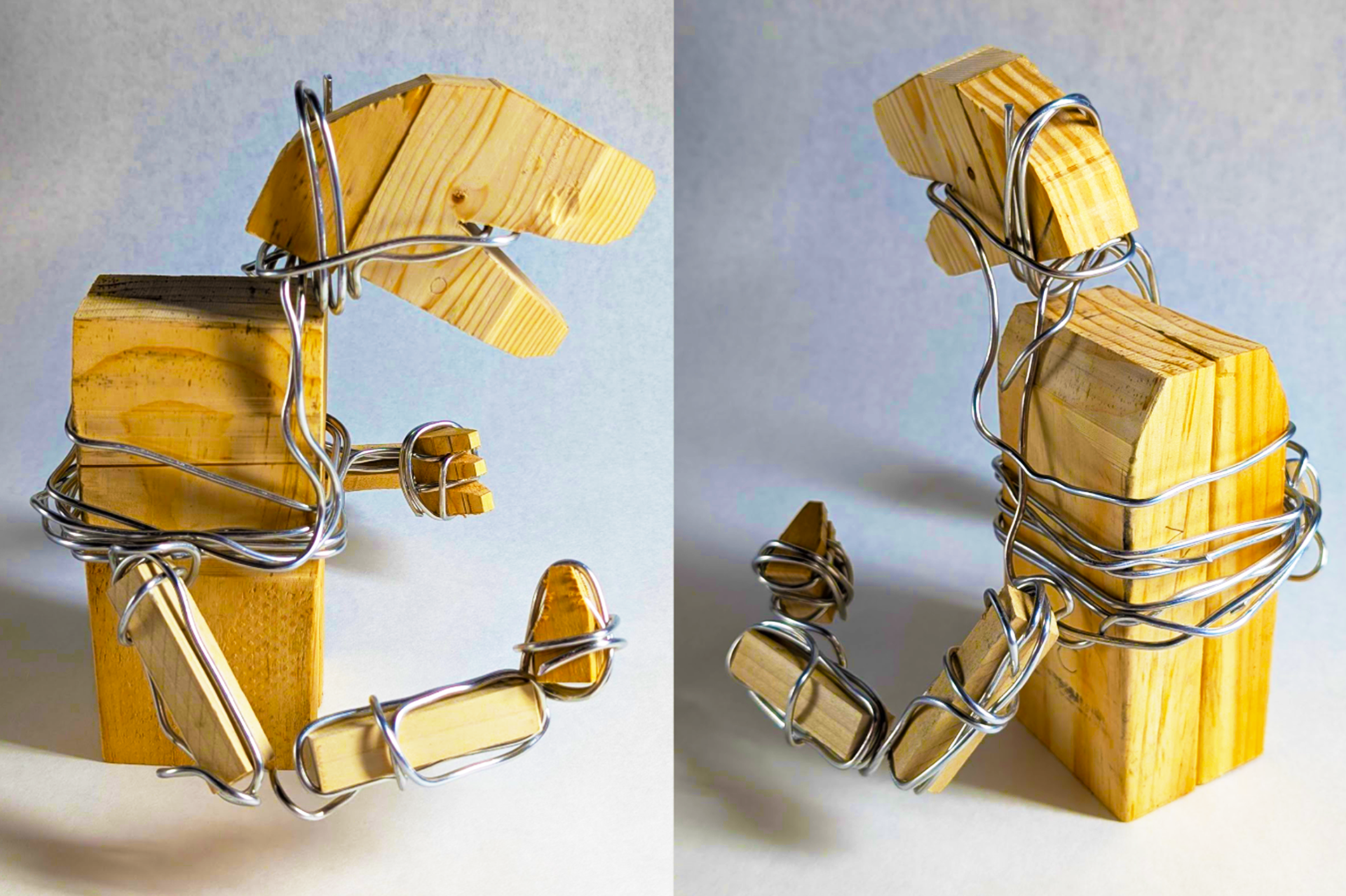
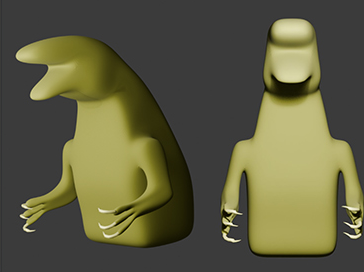
A quick lo-fi prototype using wire and wood parts cut with a bandsaw. This provided feedback as to where the servo motors would need to go and how it would all work.
A Blender 3D reconstruction of the dinosaur Maip macrothorax that I made for the project using accurate dimensions and posture.
Craft & Production
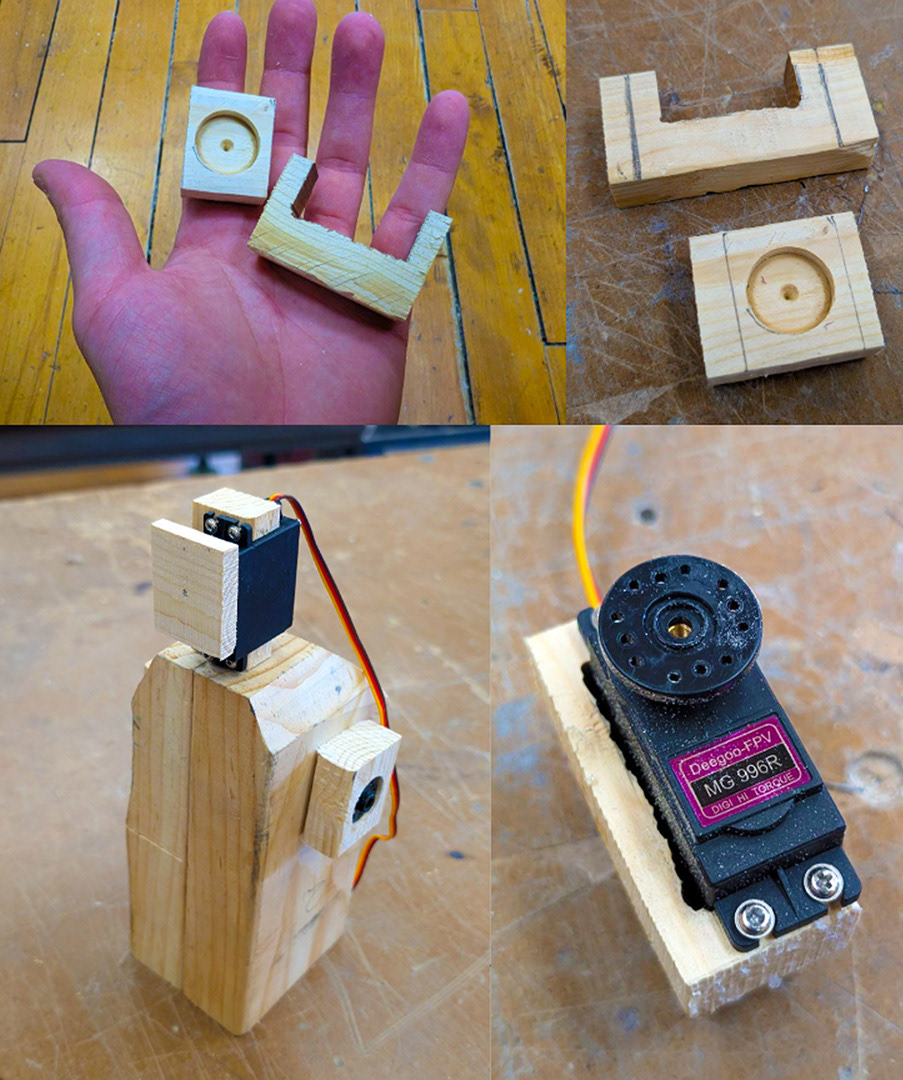
Manufactured a repeatable wood part-motor assembly.
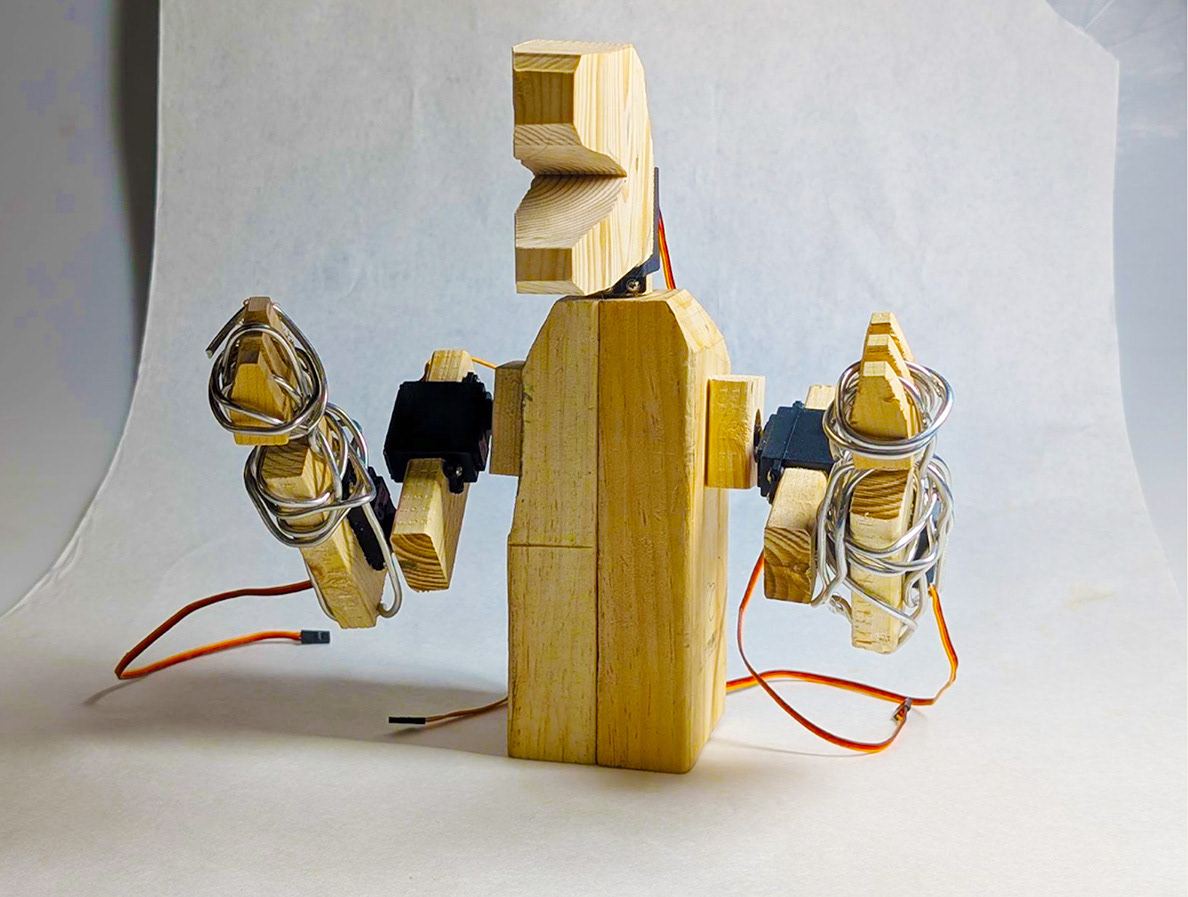
Replicated both rotating axes of both arms.
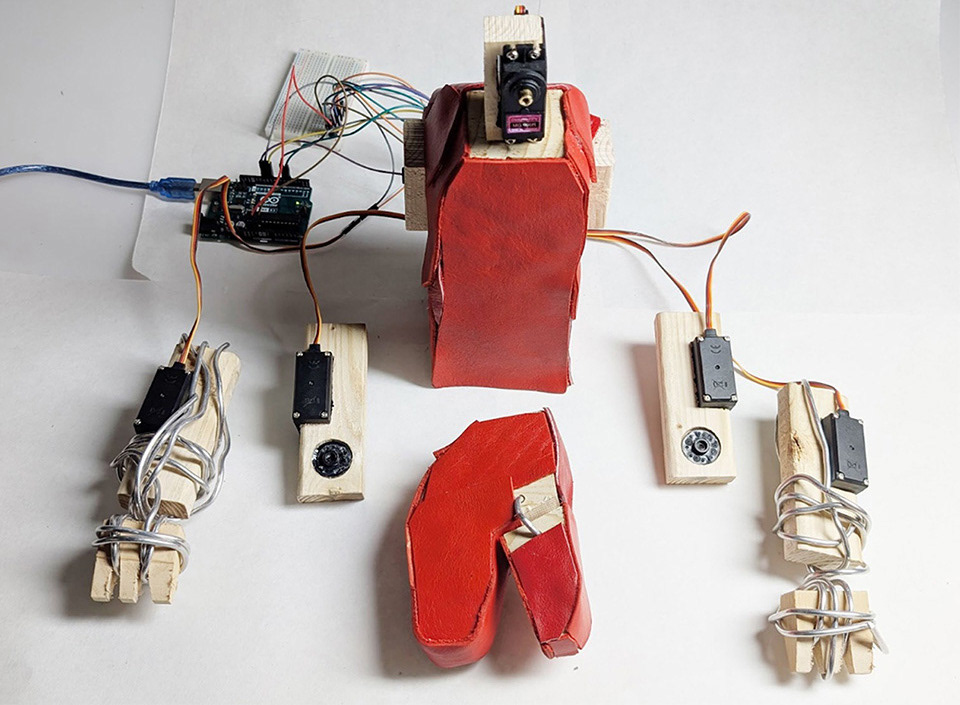
Added colors, textures, and implemented visual design/aesthetic.
Final Designs
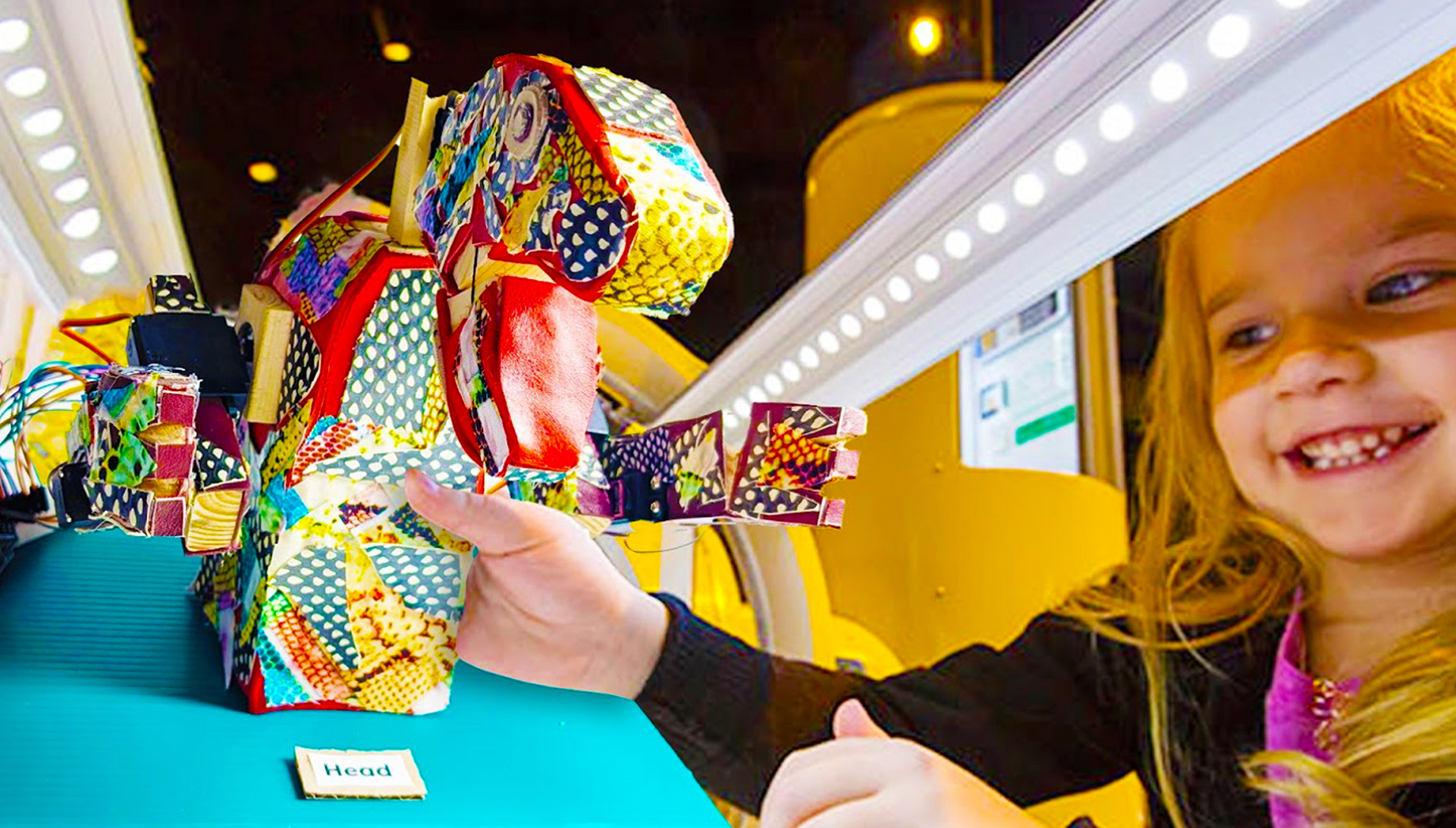
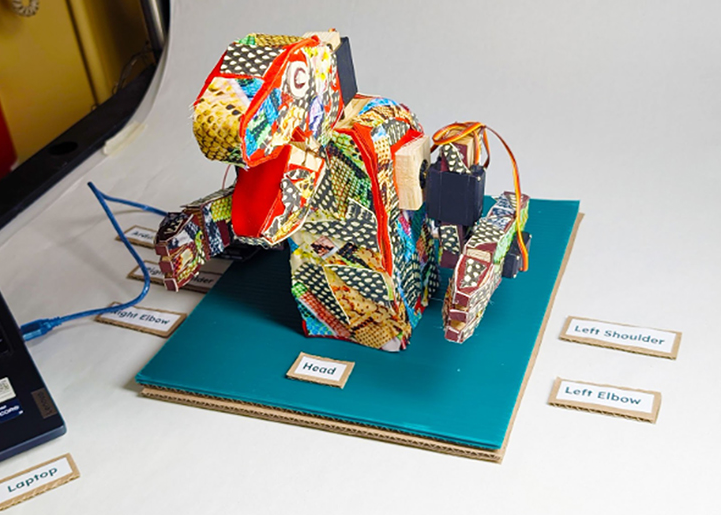
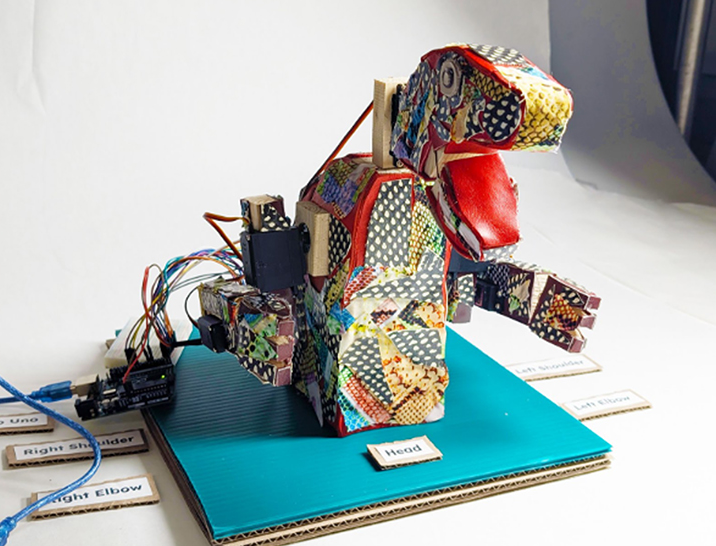
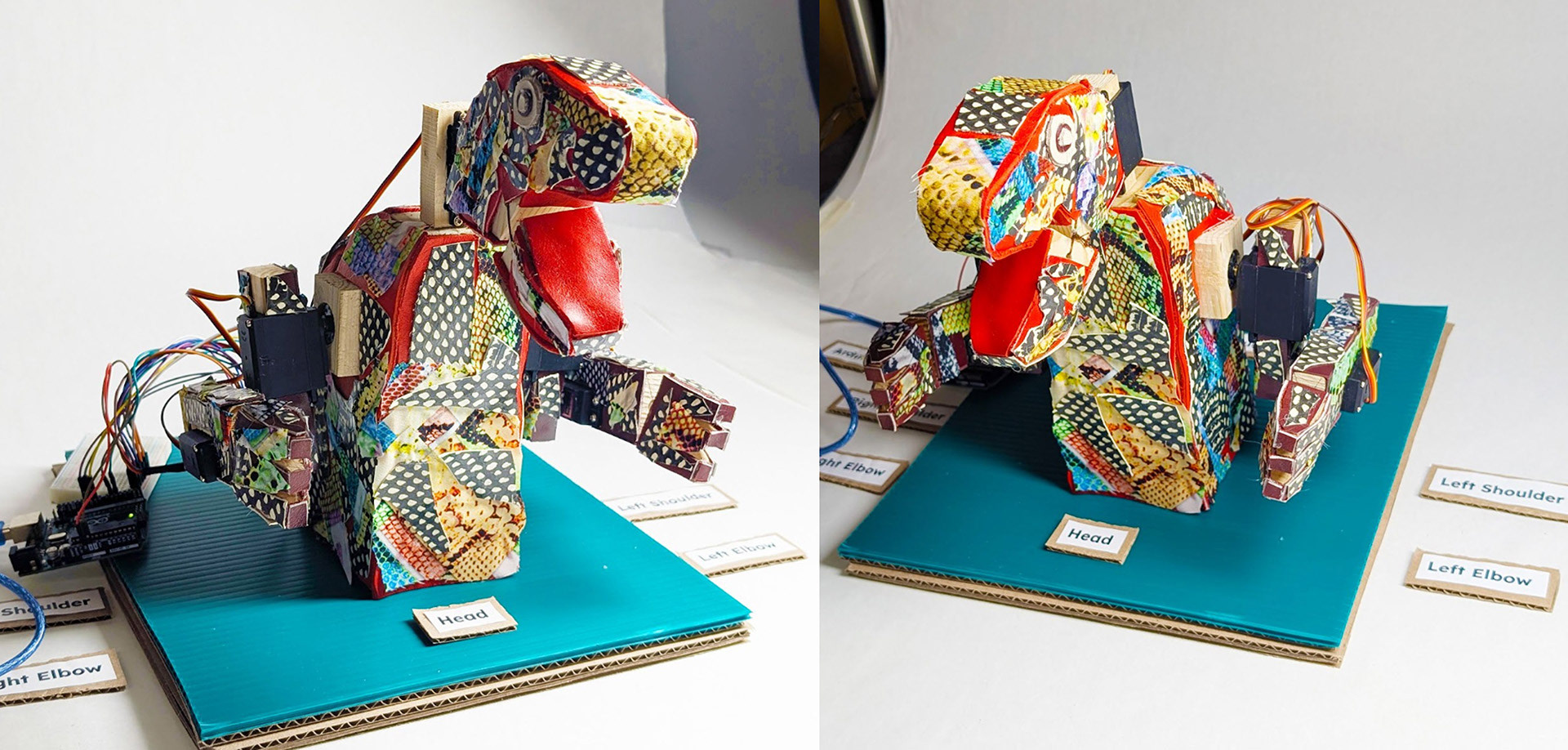
MAIP Animatronic Interaction: Connecting human curiosity with hands-on play. The animatronic's fabric and character design are directly inspired by biological form and function.
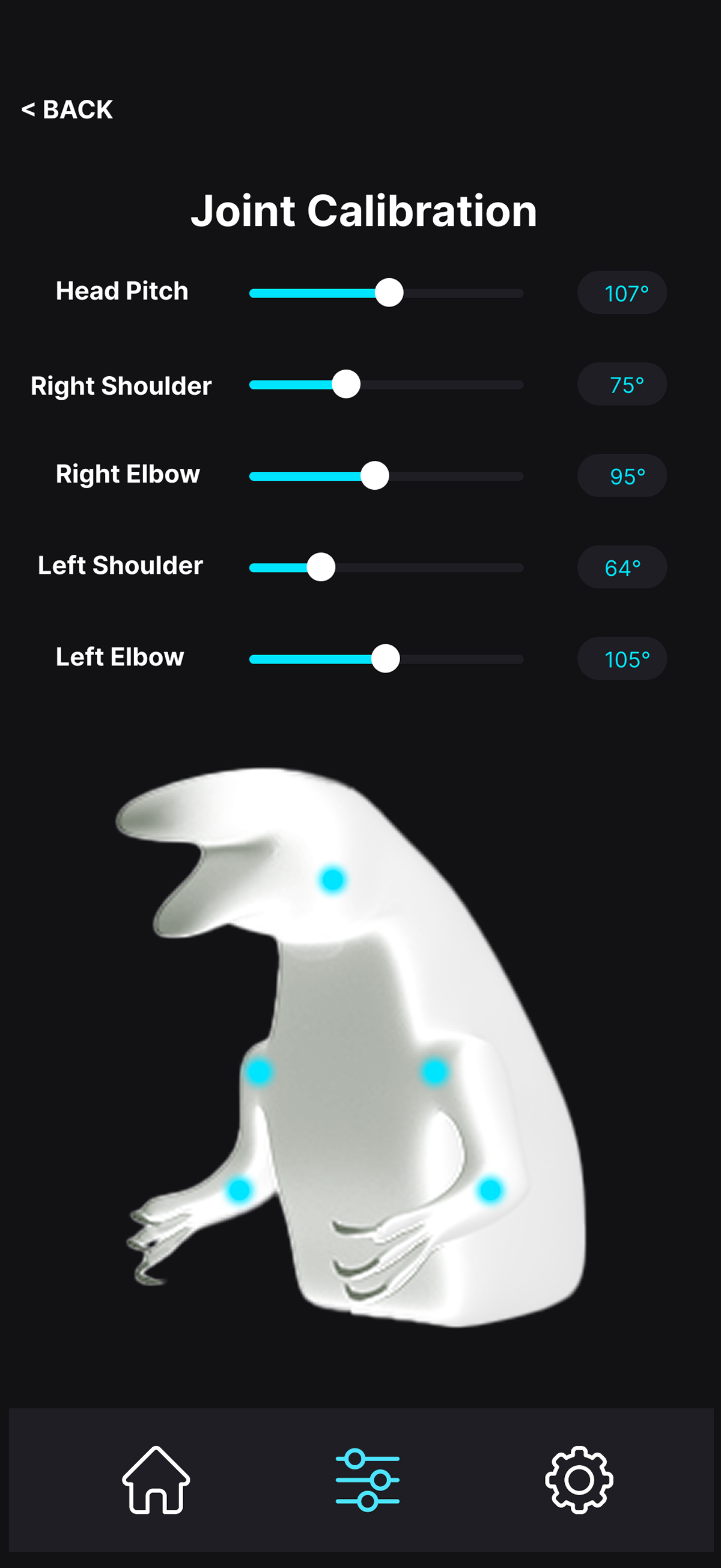
Connected Device UX: MaipOS
Simplifying a complex multi-disciplinary hardware pipeline into an accessible, intuitive digital control center.
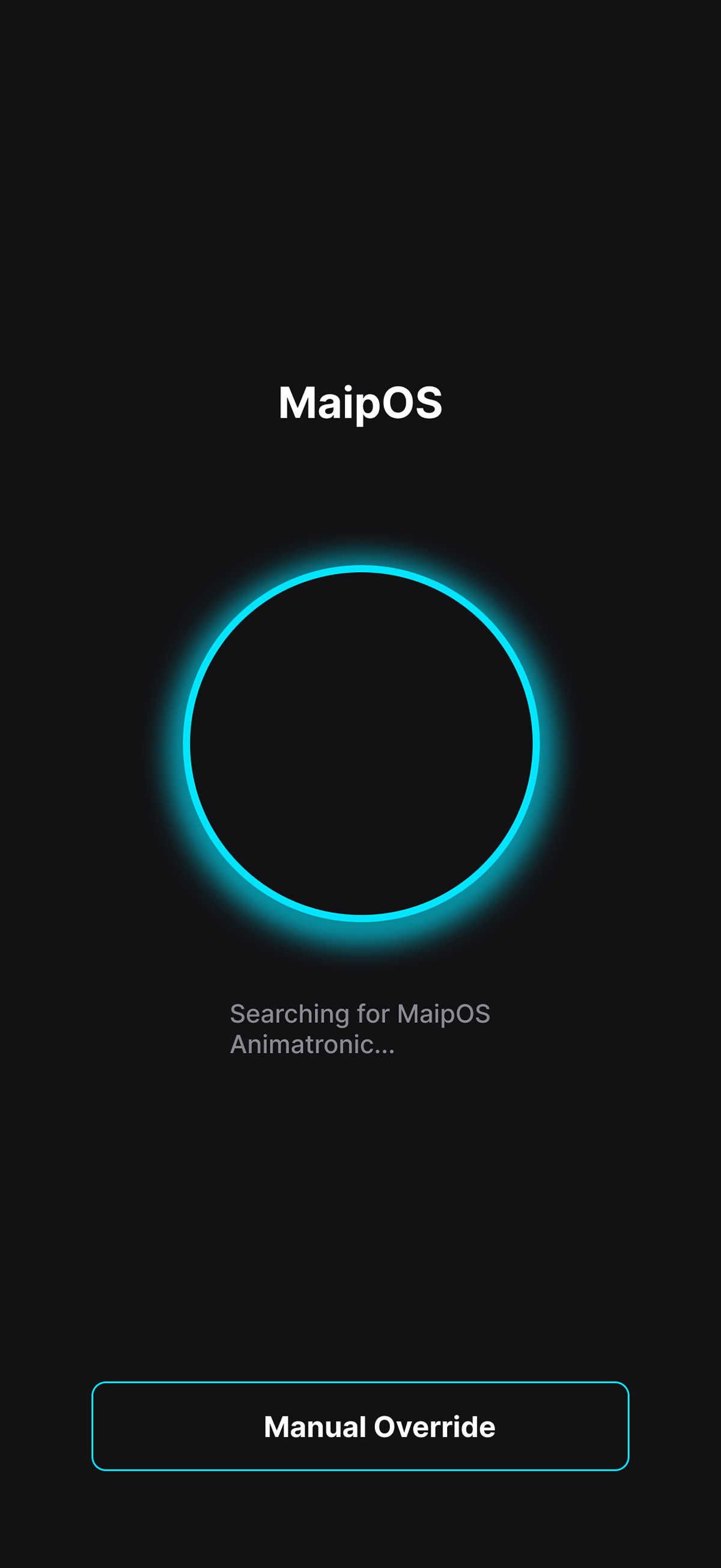
1 - Pairing
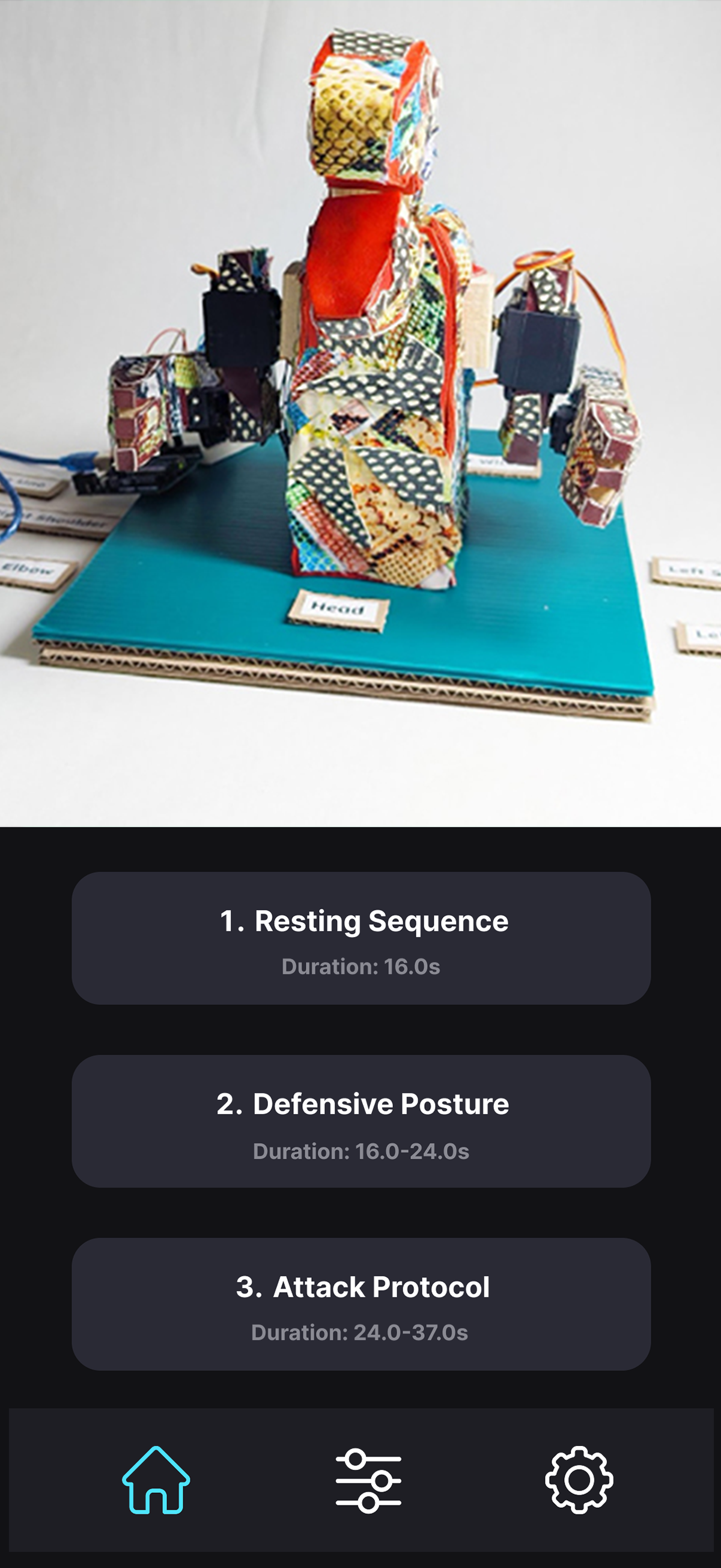
2 - Dashboard